
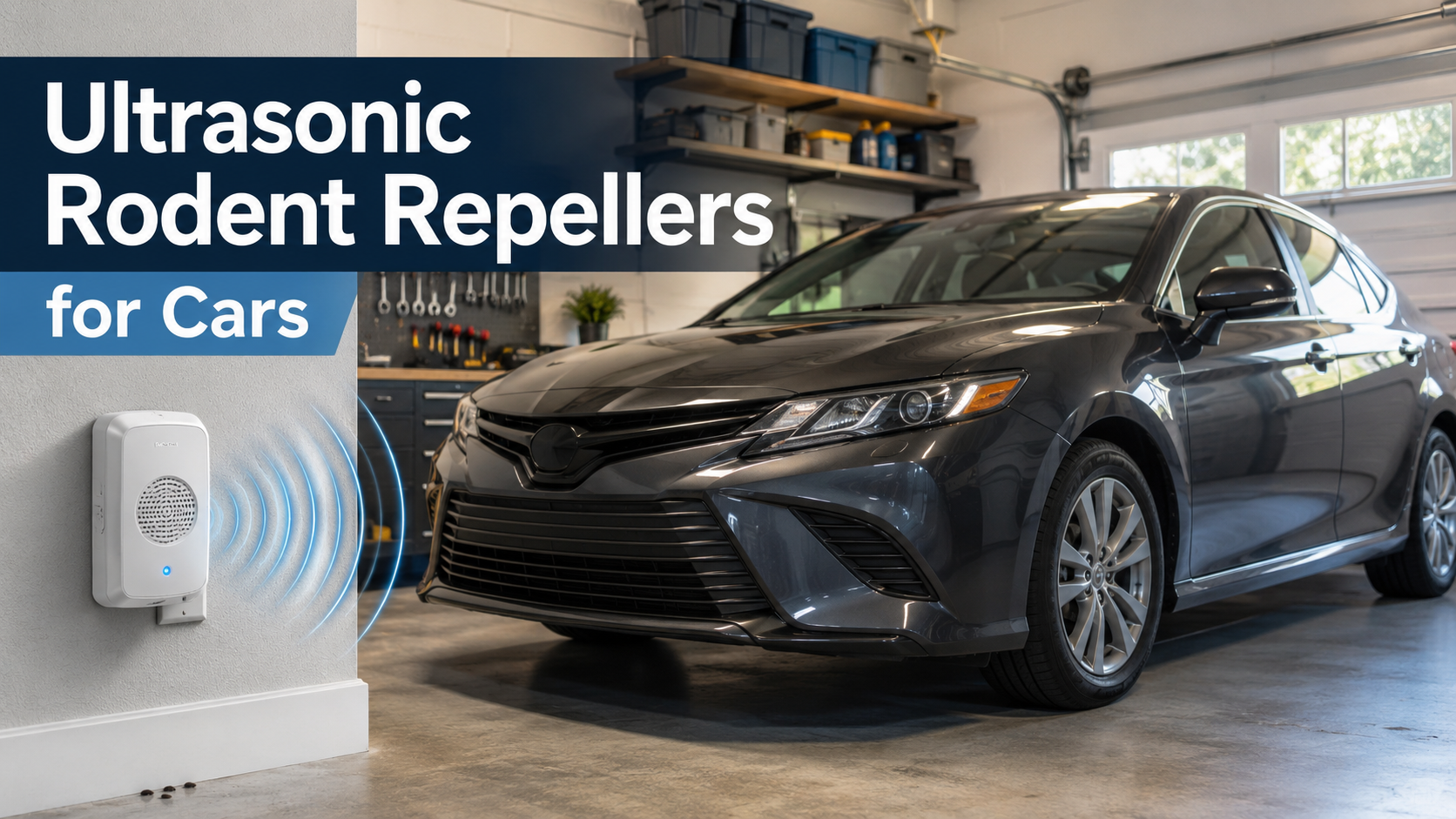
Ultrasonic rodent repellers sound like the perfect car-rodent solution.
Get DealyPlanet by email Practical help with insurance claims, expensive repairs and consumer problems.
You put a little device near the car, it makes a sound you mostly cannot hear, and the mice and rats decide to take their chewing business somewhere else.
That would be lovely.
Unfortunately, rodent prevention is rarely that clean. Ultrasonic repellers may help in some situations, especially as one layer in a broader prevention plan. But they are not a force field, and they should not be the only thing standing between your wiring harness and a mouse with poor life choices.
Quick Answer: Do Ultrasonic Rodent Repellers Work for Cars?
Ultrasonic rodent repellers may help discourage mice or rats around parked cars, but results vary and they should not be used alone. They are most useful in garages, carports, sheds, or parked-vehicle areas where the sound can reach the space rodents are using. They are less reliable in cluttered areas, sealed engine compartments, or places where food, warmth, nesting material, and shelter are still attracting rodents.
Scientific and extension sources have generally been cautious about ultrasonic pest devices. Some studies show rodents may react to certain sounds, but consumer devices often produce inconsistent results in real-world settings, and rodents may adapt or simply move to nearby areas. Cornell’s IPM program has noted that scientific evaluations have found little or no reliable effect from many ultrasonic pest devices, while University of Arizona extension material describes the evidence as limited and device-dependent. Cornell IPM / University of Arizona Extension
| Question | Short Answer |
|---|---|
| Can ultrasonic repellers help protect cars? | Maybe, especially as one layer in a garage or parking-area setup. |
| Do they stop rodents by themselves? | Do not count on it. Food, shelter, and nesting material still matter more. |
| Where do they work best? | Open garages, carports, storage areas, or parked-vehicle spaces. |
| Where do they work poorly? | Cluttered areas, hidden nests, blocked spaces, or sealed engine-bay corners. |
| Should you still use tape, spray, or cleaning? | Yes. Ultrasonic devices should be part of a layered plan. |
What I would buy based on the problem:
- Rodents returning to the same parked car: try an under-hood ultrasonic and LED repeller as one layer, especially if the car sits in a garage, driveway, shed, or storage area.
- Garage or driveway activity: use cleanup plus an outdoor deterrent such as the ASPECTEK Yard Sentinel or a solar ultrasonic repeller.
- Early signs near the car: start with peppermint rodent spray or Fresh Cab repellent pouches.
- Wires already chewed: after the repair, ask whether rodent-deterrent tape makes sense on vulnerable wiring.
An ultrasonic device should not be the whole plan. It works best with cleanup, scent deterrents, wiring protection where needed, and regular engine-bay checks.
What Is an Ultrasonic Rodent Repeller?
An ultrasonic rodent repeller is a device that emits high-frequency sound meant to annoy or discourage pests such as mice and rats. Some plug into a wall outlet. Others are battery-powered or designed for vehicles, garages, sheds, RVs, boats, or parked cars.
The basic idea is simple: rodents can hear frequencies humans generally cannot, so the device creates an uncomfortable environment for them.
That sounds plausible. Rodents do communicate and respond to sound, including ultrasonic sound. The problem is that “rodents can hear ultrasound” is not the same as “this little consumer device will keep rodents out of your car.”
That gap is where a lot of questionable pest-control marketing lives.
Why Cars Attract Rodents In The First Place
Before deciding whether an ultrasonic repeller will help, it is worth asking why the rodents are near the car at all.
Cars can be attractive to rodents because they offer:
- warmth after the engine has been running
- shelter from weather and predators
- quiet hiding places
- nesting material such as insulation or debris
- nearby food sources in garages, trash areas, or yards
- chewable wires, hoses, plastic, and foam
If the garage has birdseed, pet food, trash, cardboard, clutter, or easy entry points, the ultrasonic device is being asked to solve the wrong problem.
The rodent is not there because your garage lacked a tiny speaker. It is there because the environment works.
If you are still trying to understand the car-wiring problem itself, start with our guide to why rodents chew car wires.
When Ultrasonic Repellers May Help
Ultrasonic repellers are most likely to help when they are used in a controlled area where sound can actually reach the places rodents travel.
They may be worth trying in:
- a garage where a car is parked overnight
- a carport with nearby rodent activity
- a shed or storage area with a parked vehicle
- an RV or seasonal vehicle storage area
- a driveway problem where the device has a clear line of exposure
The key is placement. Sound does not magically wrap around every object. Clutter, walls, insulation, boxes, and engine-bay structure can all reduce where the sound reaches.
Think of an ultrasonic repeller as a room or area deterrent, not a complete vehicle shield.
Best fit: An ultrasonic repeller makes the most sense when rodents keep returning to the same car, garage, driveway, shed, RV, or storage area.
For the car itself, look at an under-hood ultrasonic and LED repeller. For a garage, driveway, or outdoor approach path, look at an outdoor ultrasonic deterrent.
Either way, clean the area first. If the car is surrounded by birdseed, pet food, trash, cardboard, or nesting material, the device is being asked to do too much.
When Ultrasonic Repellers Are Probably Not Enough
An ultrasonic device is least likely to help when rodents already have a good reason to stay.
That includes situations where:
- there is an active nest in or near the vehicle
- the garage contains pet food, birdseed, or trash
- there are droppings or nesting material in the engine bay
- the vehicle sits unused for long periods
- the parking area is full of clutter or brush
- rodents have already chewed wiring once
Once rodents are established, the device may annoy them without solving the problem. They may avoid one spot and move to another. Or they may simply get used to it.
That is why the honest answer is not “ultrasonic repellers work” or “ultrasonic repellers are useless.” The better answer is: they are a weak-to-moderate layer at best, and they should not be your only layer.
Ultrasonic Repeller vs. Spray vs. Tape
For cars, different rodent deterrents do different jobs.
| Deterrent | Best Use | Main Limitation | Product Link |
|---|---|---|---|
| Under-hood ultrasonic repeller | Cars that sit in the same garage, driveway, shed, or storage area | Sound may not reach every hiding place, and results vary | Check under-hood repeller |
| Outdoor ultrasonic / motion deterrent | Garage, driveway, yard, or parking-area rodent activity | Works best when aimed at the area rodents actually use | Check ASPECTEK Yard Sentinel |
| Peppermint spray | Wheel wells, garage areas, and safe areas near the engine bay | Needs regular reapplication after heat, weather, or cleaning | Check peppermint spray |
| Scent pouches | Parked cars, garages, storage areas, RVs, and enclosed spaces | Scent fades and may not stop determined rodents | Check Fresh Cab pouches |
| Rodent-deterrent tape | Specific wires or harnesses after chewing damage or repairs | Only protects what it covers | Check rodent tape |
Ultrasonic devices are broad-area deterrents. Rodent tape is targeted. Sprays and pouches sit somewhere in between. Cleaning and exclusion are the boring foundation that makes every other product less useless.
For a broader comparison, see our guide to the best rodent repellents for cars.
Where To Place an Ultrasonic Repeller For a Car
If you are going to try one, placement matters more than the marketing copy.
Better placement ideas include:
- near the front of the parked car, aimed toward the engine area
- near a garage wall where droppings or travel paths appear
- near storage shelves, trash, or entry points after those areas are cleaned
- in an RV or stored vehicle area with open space around the device
- in more than one location if the garage is large or cluttered
Worse placement ideas include:
- behind boxes or stored junk
- inside a cabinet
- behind the car where the sound is blocked
- far from the area where rodents travel
- as a substitute for removing food and nesting material
If the device is battery-powered and designed for vehicles, follow the manufacturer’s placement instructions carefully. You do not want a loose device rattling around an engine bay, touching hot components, or interfering with moving parts.
What To Do Before Buying One
Before buying an ultrasonic repeller, do the unglamorous stuff first.
- Clean the parking area: Remove food, trash, birdseed, pet food, cardboard, and clutter.
- Check the engine bay: Look for nesting material, droppings, chewed insulation, or debris.
- Seal obvious entry points: Especially in garages, sheds, and storage areas.
- Move attractants away from the car: Garbage cans, compost, and food storage should not be next to the vehicle.
- Inspect wiring regularly: Early signs of chewing are easier to handle than a destroyed harness.
Then, if you want to add an ultrasonic device, treat it as one extra deterrent.
Not the plan. One part of the plan.
What I Would Buy First
If the problem is a car that keeps attracting mice or rats in the same parking spot, I would start with the under-hood ultrasonic and LED repeller, plus cleanup around the parking area.
If the problem is the garage, driveway, or yard around the car, I would use an outdoor deterrent such as the ASPECTEK Yard Sentinel or Maxfetched solar ultrasonic repeller.
If you are still in prevention mode, I would add peppermint spray or Fresh Cab pouches as a scent layer.
If wires have already been chewed, I would not rely on sound or scent alone. After the repair, ask whether rodent-deterrent tape makes sense on the vulnerable wiring.
If Rodents Already Chewed Your Wires
If the damage already happened, prevention comes after diagnosis and repair.
Start by asking the mechanic exactly what was damaged. Was it a small wire? A sensor connector? A major harness? A hose? Insulation? The location of the damage tells you where prevention matters most.
After the repair, you may want to combine:
- cleaning the engine bay and parking area
- removing nearby food sources
- rodent-deterrent tape on the repaired wiring
- spray or scent deterrents near repeat problem areas
- an ultrasonic device in the garage or storage space
- regular inspections for new droppings or nesting material
If you are trying to protect wiring after a repair, see our guide to rodent deterrent tape for car wires.
If the repair bill is large, you may also want to understand whether car insurance may cover rodent damage.
Are Ultrasonic Repellers Worth Buying?
Sometimes — with realistic expectations.
An ultrasonic repeller is worth considering if the car sits in a garage, driveway, shed, RV area, or storage space where rodents keep showing up. It is easy to test, does not use poison, and can add pressure to an area you are already cleaning and checking.
It is not worth relying on by itself if you already have chewed wires, an active nest, food stored nearby, or a cluttered garage full of shelter. In those situations, the device may annoy rodents without removing the reason they are there.
The best version of the ultrasonic repeller story is boring: it may make an already-unfriendly parking area a little less attractive to rodents.
The worst version is common: someone plugs in a device, changes nothing else, and then is surprised when a mouse chews the car anyway.
Bottom line: buy an ultrasonic repeller if you want one more layer. Do not buy it as a substitute for cleanup, scent deterrents, wiring protection, or regular checks.
Check the under-hood ultrasonic and LED repeller on Amazon
Related Guides
- Best Rodent Repellents for Cars
- Rodent Deterrent Tape for Car Wires
- Why Rodents Chew Car Wires
- Soy-Based Wiring and Rodents
- Rodent Damage Car Repair Cost
Frequently Asked Questions About Ultrasonic Rodent Repellers for Cars
Do ultrasonic rodent repellers really work for cars?
They may help in some garage or parked-vehicle situations, but results vary. They work best as one layer of a broader prevention plan, not as the only protection.
Where should I put an ultrasonic repeller near my car?
Place it where sound can reach the area rodents travel, such as near the front of the parked car, near garage walls with droppings, or near cleaned entry points. Avoid hiding it behind boxes or clutter.
Can ultrasonic repellers stop mice from chewing car wires?
Do not rely on an ultrasonic device alone to stop wire chewing. If wires have already been damaged, consider repair, cleaning, rodent-deterrent tape, and broader prevention steps.
Are ultrasonic rodent repellers safe for pets?
Check the specific product instructions. Some pets may hear or react to certain frequencies, and devices should not be placed where pets are trapped near the sound without an escape route.
What is better for car wiring: ultrasonic repeller or rodent tape?
Rodent tape is better for protecting specific wires or harnesses. Ultrasonic repellers are broader area deterrents. Many drivers use both, along with cleaning and exclusion.
Write a Reply or Comment