
Pet insurance sounds simple enough. You sign up, pay your premium, and expect coverage to be there when your dog or cat needs medical care.
But there is one detail that catches a lot of pet owners off guard: waiting periods.
If you do not understand how pet insurance waiting periods work, you could wind up paying for a policy that does not actually help when you need it most.
That matters because one of the biggest frustrations with pet insurance is the gap between what people think they bought and what the policy really covers. If you are still deciding whether this kind of coverage makes sense at all, start with our breakdown of when pet insurance is not worth it, which looks at the real-world situations where the math often fails pet owners.
Quick Answer: What Is a Pet Insurance Waiting Period?
A pet insurance waiting period is the amount of time between when you enroll in a policy and when coverage actually begins. If your pet gets sick or injured during that period, the insurer usually will not pay for the claim.
Insurance companies use waiting periods to stop people from signing up only after their pet is already sick or hurt. From the insurer’s perspective, that makes sense. From the pet owner’s perspective, it can be a nasty surprise.
Typical Pet Insurance Waiting Periods
Most pet insurance policies have different waiting periods depending on the type of issue involved.
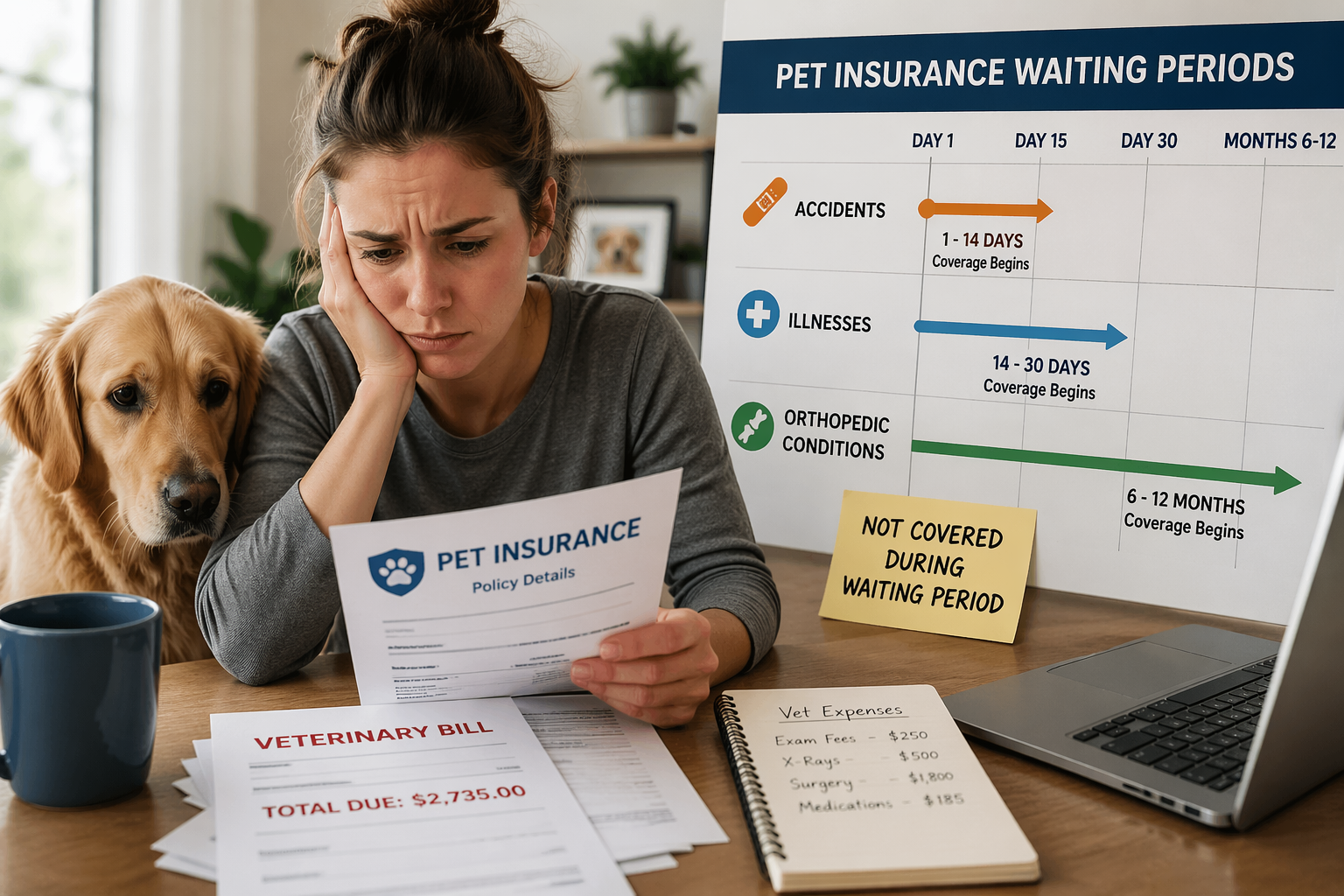
- Accidents: often 1 to 14 days
- Illnesses: often 14 to 30 days
- Orthopedic conditions: sometimes 6 to 12 months
That last category is especially important. Major ligament and joint problems can be some of the most expensive issues a pet owner faces, yet they are also the ones most likely to have long waiting periods.
So even after you start paying monthly premiums, you may still be months away from meaningful coverage for certain costly conditions.
Why Pet Insurance Waiting Periods Burn People
On paper, waiting periods sound like a technical detail. In practice, they can completely change whether a policy has real value.
1. You Sign Up After You Start Worrying
A lot of pet owners do not think seriously about insurance until something feels wrong.
Maybe your dog starts limping. Maybe your cat has digestive issues. Maybe your pet just does not seem like itself.
At that point, it is natural to start looking for financial protection. But if you enroll after symptoms appear, the waiting period may leave you uncovered right away, and the insurer may later treat the issue as a pre-existing condition.
That means the policy may not help with the very problem that pushed you to buy it.
2. Symptoms Show Up During the Waiting Period
Even if your pet appears perfectly healthy when you enroll, problems can arise quickly.
If symptoms begin during the waiting period, you are usually paying out of pocket. And depending on how the insurer views the case, that issue may be excluded going forward as well.
This is one of the biggest reasons pet insurance can be more limited than it first appears.
3. Orthopedic Waiting Periods Can Be Brutal
Some of the worst waiting period problems show up with orthopedic conditions.
Policies may delay coverage for issues involving knees, hips, ligaments, or similar structural problems for months. That is a major issue because these conditions can be extremely expensive to treat.
If your dog tears a ligament or develops a significant joint issue during that exclusion window, your policy may be far less helpful than you expected.
4. You Are Paying Before You Are Fully Protected
This is the part that feels especially frustrating to many people: you can be paying premiums while still lacking meaningful coverage.
Technically, you have insurance. Functionally, your protection may still be incomplete.
That does not make waiting periods illegitimate, but it does reduce the immediate value of what you are buying.
Why Insurance Companies Use Waiting Periods
To be fair, waiting periods exist for a reason.
Without them, people could wait until a pet was already injured or ill, buy a policy, and file a claim immediately. If everyone did that, the entire insurance model would break down.
So from the insurer’s side, waiting periods are a way to manage risk and prevent obvious abuse.
But while they may make sense for the company, that does not mean they always make sense for you.
How Waiting Periods Change the Value of Pet Insurance
Waiting periods reduce the real-world value of pet insurance in a few important ways:
- you are paying premiums before coverage is fully active
- some of the most serious conditions may have the longest delays
- symptoms that appear too early may be excluded later
- you may discover too late that the policy is less protective than you assumed
This is one of the reasons why pet insurance is not always worth it for every owner.
When you combine waiting periods with deductibles, reimbursement limits, exclusions, and pre-existing condition rules, the policy may deliver much less value than the marketing suggests. That is also why broad pro-insurance articles like our earlier guide on how pet insurance can protect your best friend when it matters most are only part of the story.
How to Reduce the Risk of Getting Burned
If you decide you still want pet insurance, timing is everything.
- Enroll early: Waiting periods hurt less when your pet is young and healthy
- Read the policy carefully: Do not assume one company’s waiting periods match another’s
- Pay attention to orthopedic exclusions: These can be much longer than standard illness waiting periods
- Do not wait for symptoms: Buying after you become worried is often too late to be useful
If you are new to the category, our article on pet insurance for your furry friend covers the broader appeal of coverage, but the timing issue here is one of the biggest reasons expectations and reality diverge.
Are Waiting Periods a Deal Breaker?
Not always.
For some pet owners, waiting periods are just part of the tradeoff. If your pet is young, healthy, and you enroll well before problems appear, the delay may not matter much in the long run.
But for other owners, waiting periods are a major strike against the product. If you are already worried about your pet, or if the conditions you most fear are subject to long exclusions, the policy may not offer the protection you think it does.
That is why the right question is not just “Does this plan have waiting periods?” Every plan does. The real question is “Do these waiting periods make the policy less useful for my specific situation?”
What to Check Before You Buy Pet Insurance
Before signing up, ask these questions:
- How long is the accident waiting period?
- How long is the illness waiting period?
- Is there a separate orthopedic waiting period?
- What happens if symptoms appear during the waiting period?
- How does the company define a pre-existing condition?
- Are there any breed-specific limitations?
If you cannot answer those clearly, you are not ready to judge whether the policy is a good deal.
Related Pet Insurance Guides
The Bottom Line
Pet insurance waiting periods are easy to overlook, but they can have a huge impact on whether coverage is actually useful.
If your pet gets sick or hurt during that window, you may be paying out of pocket anyway. In some cases, the issue may also become permanently excluded from future coverage.
That does not mean pet insurance is always a bad idea. It does mean you should understand the timing rules before you buy.
Otherwise, you may end up paying for protection that is not really there when you need it most.
Frequently Asked Questions
How long is the waiting period for pet insurance?
It depends on the policy, but accident waiting periods are often 1 to 14 days, illness waiting periods are often 14 to 30 days, and orthopedic waiting periods can stretch from several months up to a year.
Does pet insurance cover accidents immediately?
Usually not. Even accident coverage often has a short waiting period, so you should not assume your pet is protected the day you sign up.
What happens if my pet gets sick during the waiting period?
In most cases, the insurer will not cover treatment for that issue. Depending on the policy and the diagnosis, the condition may also be treated as pre-existing going forward.
Are waiting periods a reason not to buy pet insurance?
They can be. Waiting periods are one of the main reasons some people decide pet insurance is not worth it, especially if they are signing up late or dealing with an older pet.
Write a Reply or Comment