Updated July 2026
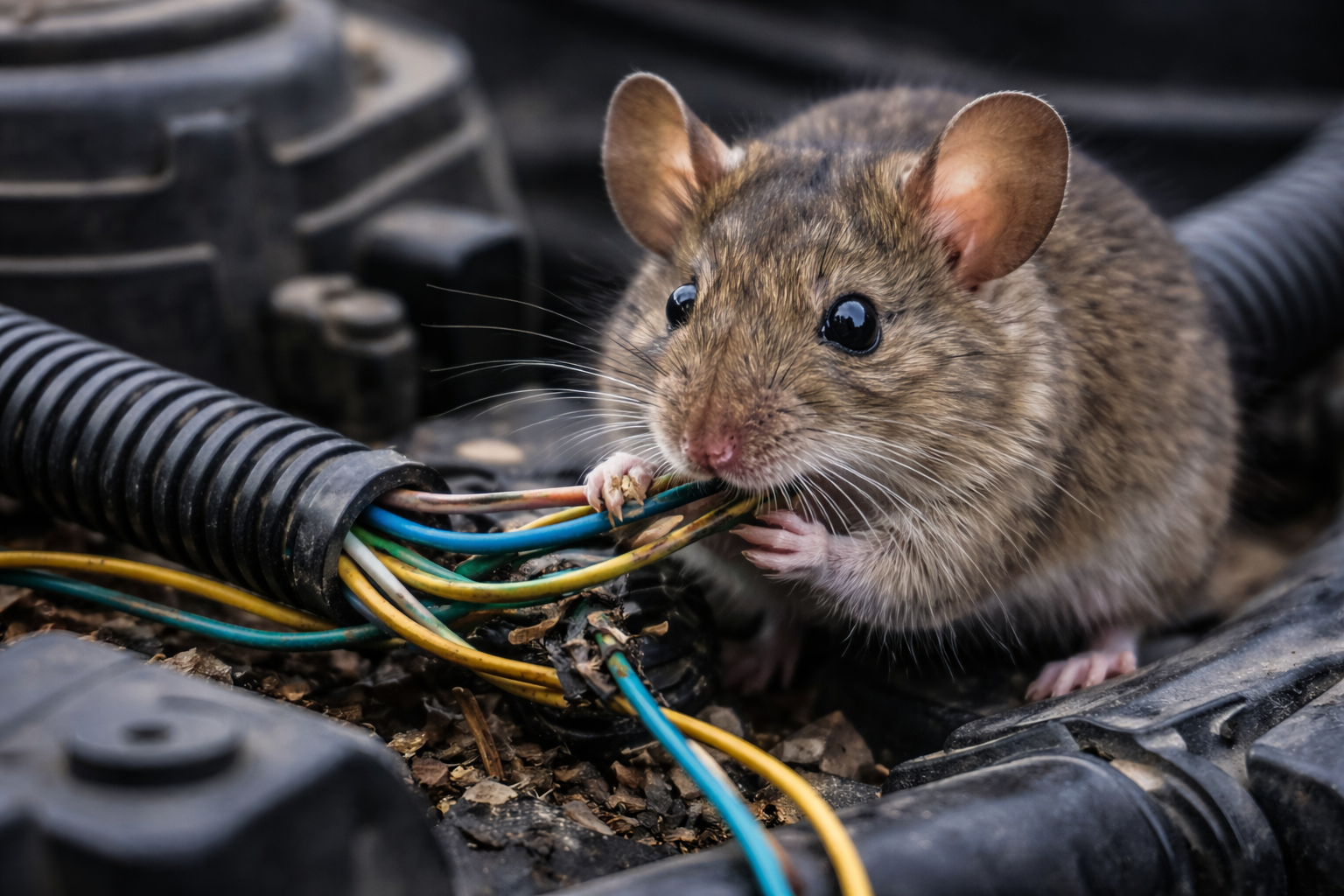
Quick answer: Mice and rats chew car wires because engine bays provide shelter, nesting space, warmth, and materials that are easy to gnaw. Their teeth grow continuously, but chewed wiring does not prove that rodents are eating soy-based insulation. The best prevention combines cleanup, regular inspection, reduced access, and protection for vulnerable wiring.
Chewed wires can cause warning lights, electrical failures, starting problems, and expensive repairs. Drivers often discover the problem only after a mechanic finds droppings, nesting material, or damaged insulation under the hood.
Soy-based materials are frequently blamed, but rodents also chew conventional plastic, rubber, foam, and other automotive materials. Read our separate guide to soy-based wiring and rodent damage for a closer look at that question.
If wires have already been damaged, see how much rodent damage to a car can cost to repair.
Rodents Need to Constantly Chew
The most important reason rodents chew wires is simple biology. Rats, mice, and other rodents have teeth that never stop growing. To keep their teeth from becoming too long, they must constantly gnaw on materials to wear them down.
In the wild, rodents chew on wood, plant material, seeds, and other natural objects. But in urban environments they often encounter plastic, rubber, and electrical insulation instead.
Unfortunately, the wiring inside a car’s engine bay provides exactly the type of material rodents instinctively chew.
Does Soy-Based Wiring Attract Rodents?
Some modern vehicles use plant-derived materials in certain plastics, coatings, foams, and wiring-related components. That has led to the widespread claim that mice and rats chew car wiring because the insulation contains soy.
Soy alone does not explain the problem. Rodents also damage conventional wire insulation, rubber hoses, plastic components, sound insulation, and upholstery. The sheltered engine compartment and the animal’s need to gnaw are more useful starting points when deciding how to prevent another repair.
Materials also vary by automaker, supplier, model, component, and production year. Our guide to which cars may use soy-based wiring explains what is known and where the common claims go too far.
Engine Bays Provide Warm Shelter
A parked car provides an ideal shelter for small animals. After driving, the engine compartment stays warm for hours, making it an attractive place for rodents looking for protection from cold weather.
Engine bays also provide:
- Protection from predators
- Dark hiding spaces
- Nearby nesting materials
- Warmth from recently driven engines
Once rodents enter the engine compartment, wiring harnesses become convenient objects for chewing.
Signs Rodents Are Chewing Your Car Wires
Rodent damage often goes unnoticed until a vehicle begins showing electrical problems. Some of the most common warning signs include:
- Dashboard warning lights
- Strange electrical problems
- Visible chewed wires
- Droppings under the hood
- Nesting material in the engine bay
Safety note: Do not sweep or vacuum dry rodent droppings or nesting material. The CDC recommends ventilating the vehicle first and wetting contaminated material with disinfectant before cleaning it. See the CDC’s instructions for cleaning a rodent-infested vehicle.
If the damage is already visible, our article on rodents destroying cars explains how widespread this problem has become.
If you want to confirm whether rodents are already nesting in the vehicle, read our guide on the signs a rodent is living in your car.
Why Rodents Choose Parked Cars
Rodents rarely choose a car at random. In most cases the vehicle is parked near an environment that already supports rodents.
Common attractants include:
- Garbage containers
- Pet food or bird seed
- Wood piles or dense vegetation
- Cluttered garages
If rodents are regularly visiting trash areas, our guide to why rats love garbage cans explains how unsecured trash can quickly attract infestations.
How to Stop Rodents From Chewing Car Wires
There is no single product that guarantees rodents will leave a car alone. The best approach is to reduce the reasons rodents are there in the first place, then add deterrents where they make sense.
Start with the area around the car:
- Remove birdseed, pet food, cardboard, trash, leaves, and nesting material near the parking area
- Keep garbage containers sealed
- Inspect the engine bay periodically, especially if the car sits for days at a time
- Move the car occasionally if it is parked in the same place for long periods
- Look for droppings, nesting material, chewed insulation, or strange smells under the hood
Best prevention path:
- After wiring damage: consider rodent-deterrent tape after the repair.
- Same car, same parking spot: add an under-hood ultrasonic repeller.
- Early warning signs: use peppermint spray or Fresh Cab pouches as a scent layer.
- Garage or driveway problem: use cleanup plus an outdoor deterrent such as the ASPECTEK Yard Sentinel.
For a full product breakdown, see our guide to the best rodent repellents for cars.
What I Would Do First
If I found chewed wires, I would repair the damage first, then ask the mechanic whether rodent-deterrent tape makes sense on the repaired or vulnerable wiring. Tape only protects what it covers, so it is not a complete prevention plan.
If I found droppings, nesting material, or repeated activity but no wiring damage yet, I would start with cleanup, peppermint spray or pouches, and regular engine-bay checks.
If the same car keeps attracting rodents in the same parking spot, I would add an under-hood ultrasonic repeller and look closely at the garage, driveway, shed, or trash area nearby.
How Much Rodent Damage Can Cost
Repair costs vary widely depending on the vehicle and the amount of wiring damage. Minor repairs may cost a few hundred dollars, but complex wiring harness replacements can cost much more.
Some comprehensive auto insurance policies may cover rodent damage. Our guide to rodent damage and auto insurance coverage explains when policies may help pay for repairs.
For a more detailed repair breakdown, see how much rodent damage to a car can cost to repair.
Related Pest Control Guides
- Complete Pest Control Guide
- Rodent Damage Prevention Guide
- How to Keep Rodents Out of Your Car Engine
- How to Tell If a Rodent Is Living in Your Car
- How Much Does Rodent Damage to a Car Cost to Repair?
Preventing Rodent Damage Early
The best way to avoid expensive repairs is to prevent rodents from nesting near your vehicle in the first place.
If you’re dealing with rodents around your home, garage, or trash storage area, our Rodent Damage Prevention Guide walks through the most effective prevention strategies.
By addressing rodent activity early, you can dramatically reduce the chance that mice or rats will start chewing the wiring inside your vehicle.
 💬
Dealy Planet
💬
Dealy Planet
