
Updated: May 17 2026
Get DealyPlanet by email Practical help with insurance claims, expensive repairs and consumer problems.
If you’ve ever heard scratching at night and told yourself it was probably just pipes or the house settling, you’re not alone. Many homeowners don’t realize they have a rat problem until weeks — or even months — after the infestation begins, because rats are extremely good at staying hidden.
Rodent Damage Prevention Guide
Quick Answer: Early Signs of a Rat Infestation
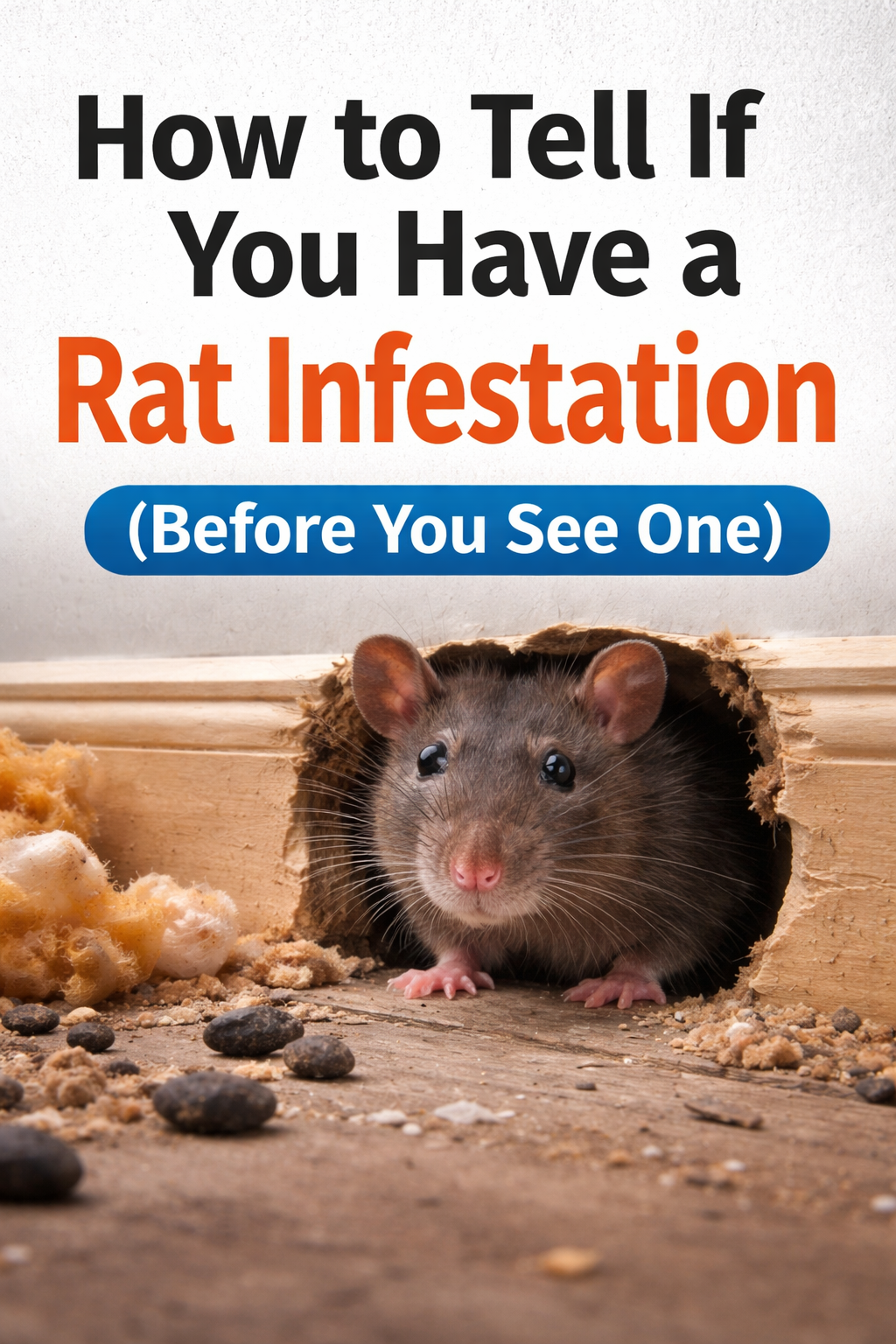
The early signs of a rat infestation often appear before you ever see a rat. Watch for nighttime scratching, droppings near walls or trash areas, greasy rub marks, small gnawed openings, musky odors, shredded nesting material, and unexplained damage to insulation, wiring, or stored food.
| Sign | What It May Mean |
|---|---|
| Scratching or movement at night | Rats may be active in walls, ceilings, attic spaces, or nearby voids |
| Droppings near walls or appliances | Rats may be traveling along hidden pathways |
| Grease marks | Rats may be using the same route repeatedly |
| Musky odor | There may be nesting activity or urine buildup nearby |
| Gnawed holes or damage | Rats may be entering through gaps near pipes, vents, siding, or foundations |
Think You May Have Rats?
If you hear scratching at night, keep finding droppings, or suspect rats are getting into walls, garbage areas, or storage spaces, pest control help may be able to identify the source.
(833) 770-0877
The reality is that rats rarely appear suddenly. Long before you see one, they leave small clues: sounds, smells, and subtle damage that are easy to overlook unless you know what to watch for.
Here are the early warning signs that rats may already be living nearby — or inside your home.
Early Signs of a Rat Infestation
Rats are nocturnal and cautious, which means visual sightings are usually the last stage of an infestation, not the first.
Scratching or Movement at Night
The most common early sign is noise after dark. Rats tend to move along walls, ceilings, and attic spaces, producing scratching or scurrying sounds that shift location over time.
If noises seem to travel from one area to another, that’s often a strong indicator of animal activity rather than plumbing.
If you’re hearing consistent nighttime sounds, you may want to read our guide on
how to tell if rats are living in your walls, which covers the most common interior warning signs.
Droppings and Grease Marks
Rats follow the same paths repeatedly. Over time, their bodies leave greasy rub marks along baseboards, walls, and entry points.
You may also notice small dark droppings in hidden areas such as:
- behind trash bins
- inside garages
- near storage boxes
- along wall edges
Unusual Smells
A persistent musky odor — especially in enclosed spaces — can signal nesting activity. The smell often becomes noticeable before visible damage appears.
If the odor seems strongest near garbage storage areas, the problem may actually be starting outside.
If you’re hearing activity inside walls, this guide can help identify what may be living in your walls.
Why Rats Suddenly Appear
Accessible Garbage and Food Sources
Garbage cans are one of the biggest attractants. Food smells travel surprisingly far, and once rats identify a reliable food source, they return nightly.
If your trash area has frequent activity, see why rats love garbage cans and how to rat-proof them for prevention strategies.
If outdoor trash is attracting rats, our guide to rat-proof garbage cans explains what to look for in a stronger outdoor can.
Seasonal Movement
In colder months, rats actively search for warmth and shelter. Garages, basements, and wall cavities become ideal nesting environments.
Construction or Environmental Changes
Nearby construction, landscaping changes, or demolition can displace rodent populations, pushing them toward residential areas.
Hidden Damage Rats Can Cause
Insulation and Structural Damage
Rats shred insulation for nesting material, reducing energy efficiency and sometimes exposing wiring or pipes.
Chewed Wiring
Rodents constantly chew to wear down their teeth. Unfortunately, electrical wiring is a common target.
This doesn’t just happen inside homes — parked vehicles are increasingly affected as well. Our article on
rodents destroying cars and how to stop costly damage explains why engine bays have become attractive nesting spots.
What To Do First (Before Calling Pest Control)
- Secure garbage cans tightly and reduce food odors.
- Inspect exterior walls for openings near pipes and vents.
- Remove pet food or bird seed stored outdoors.
- Declutter garages and storage areas.
- Monitor activity at night to identify movement patterns.
For a complete overview of prevention strategies across homes, garages, and vehicles, see our
Rodent Damage Prevention Guide.
If the infestation involves animals inside walls, removal can become more complex and expensive. Here’s what it typically costs to remove animals from walls.
When the Problem Is Bigger Than You Think
If you begin seeing rats during the daytime or discovering widespread droppings, the infestation may already be established. Professional removal combined with prevention measures is often necessary.
For a step-by-step approach to eliminating rodents, here’s how to get rid of mice and similar pests in your house.
Related Pest Control Guides
- Complete Pest Control Guide
- How to Get Rid of Mice in Your House
- How Do Mice Get Into Houses?
- When to Call Pest Control
- Pest Control Cost in 2026
Frequently Asked Questions
How long can rats live in a house without being noticed?
Rats can remain undetected for weeks or months because they are nocturnal and prefer hidden travel routes.
Do rats always live inside walls?
Not always. Many infestations begin outdoors near garbage or storage areas before expanding indoors.
What is the first sign most people miss?
Nighttime scratching noises are often dismissed as normal house sounds, delaying detection.
Will rats leave on their own?
Rarely. If food and shelter remain available, rats typically stay and reproduce.
Related Reading
- How to Tell If Rats Are Living in Your Walls (and What to Do About It)
- Why Rats Love Your Garbage Cans (and How to Stop Them Coming Back)
- Rodents Are Destroying Cars — How to Stop Them Before Repairs Cost Thousands
Want the whole system? Rodent Damage Prevention Guide
Most rat infestations don’t begin with a dramatic sighting — they begin quietly. Learning the early warning signs gives you the best chance to stop damage before it spreads to walls, insulation, or even vehicles.
 💬
Dealy Planet
💬
Dealy Planet