
Updated September 2026
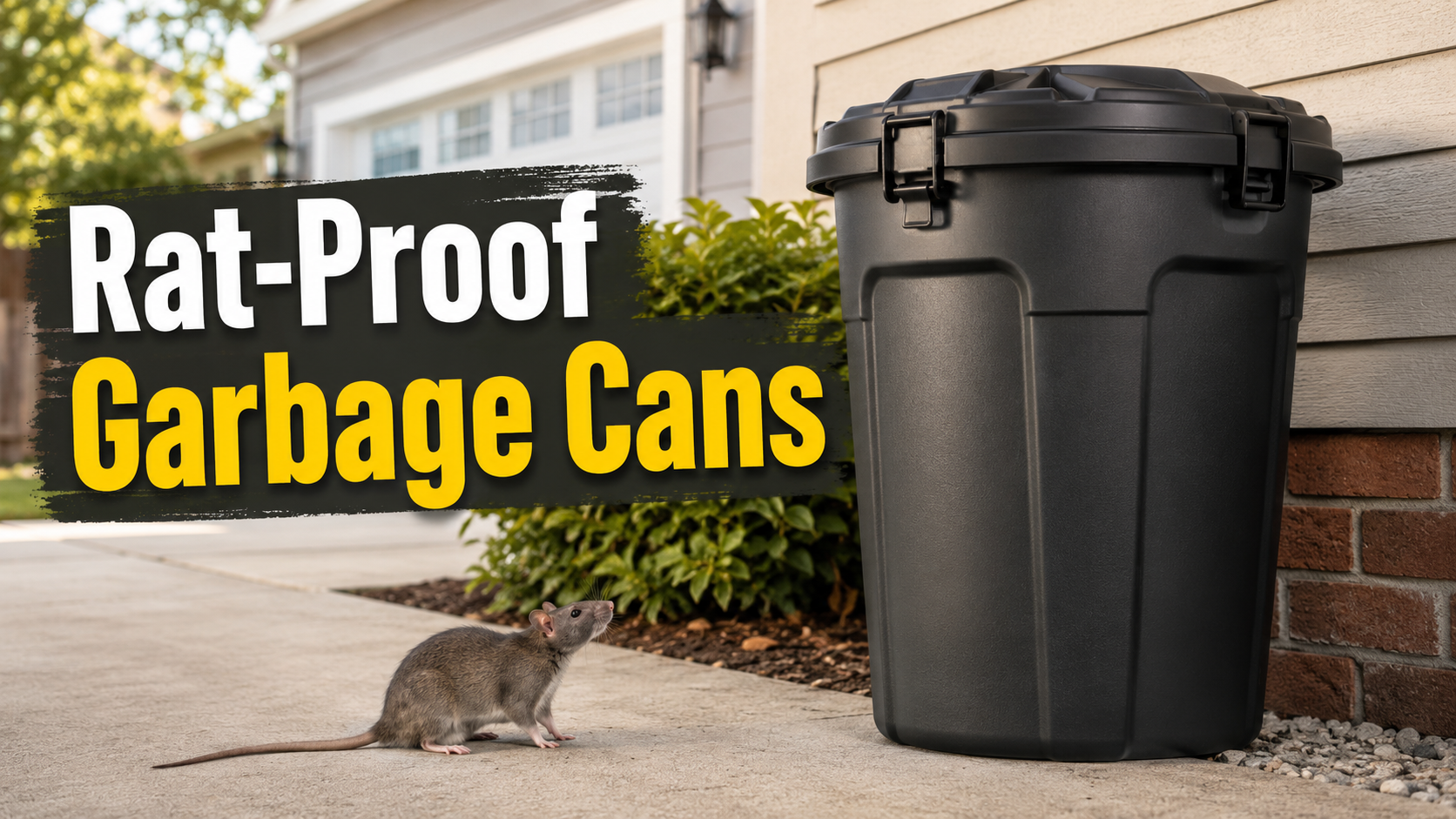
Rats can chew through many ordinary outdoor garbage cans, especially thin plastic bins containing strong food odors. A tougher can can stop rats from gnawing through the side, lifting the lid, or turning spilled garbage into a regular food source.
Quick answer: The most rodent-proof outdoor garbage cans are made from galvanized steel, which rats cannot chew through. For curbside pickup, a thick commercial-grade wheeled cart is more convenient but not completely chew-proof. If animals are entering through the top, choose a trash can with a secure latching lid.
Below are our three recommended options for preventing chewing, handling high-capacity curbside garbage, and stopping animals from opening the lid.
What I would buy based on the problem:
- Best chew resistance: choose a galvanized steel trash can, such as the Behrens 31-gallon galvanized steel can.
- Best curbside option: choose a heavy-duty wheeled cart, such as the Toter 64-gallon heavy-duty trash can.
- Best latching-lid option: choose an animal-resistant can, such as the Rubbermaid animal-resistant trash can.
- If rats are already active around the cans: fix the trash source first, then consider a broader rodent plan. See our guide to why rats love garbage cans.
The best rat-proof garbage can is the one that solves your actual weak point: chewable plastic, an easy lid, spilled food, or a can that tips over.
It was just another Thursday night. I went outside to toss my kitchen garbage into the bin. As I lifted the lid, a rat exploded out of the can like a furry missile, inches from my face. I yelped—loudly—and dropped the bag, heart pounding.
After regaining my composure, I inspected the bin. To my horror, the rat had chewed straight through the side of the plastic garbage can, gnawing its own entryway to the buffet inside. That’s when I knew it was time for a serious upgrade.
What Makes a Garbage Can Rat-Resistant?
A rat-resistant garbage can is not just a bigger plastic bin. Rats are strong chewers, and if food smells are escaping from a flimsy can with an easy lid, they may eventually find a way in.
The best outdoor garbage cans for rats usually have at least one of these advantages:
- Metal construction: Galvanized steel is the hardest common material for rats to chew through.
- Thick commercial-grade plastic: Heavy-duty carts are not truly chew-proof, but they are much harder to damage than thin plastic cans.
- A tight or latching lid: Keeping rats out is not only about chewing. It is also about stopping easy access from the top.
- Less odor leakage: A better-fitting lid makes the can less attractive in the first place.
- Stable design: A can that tips over easily becomes a buffet.
If rats are already chewing through your garbage cans, do not just replace the can with the same kind of plastic bin. Upgrade the material, the lid, or both.
If you’ve ever dealt with rats turning your garbage can into their personal diner, it’s time to invest in something sturdier. Here are the three best high-capacity garbage cans that rats can’t eat through — tested for durability, build quality, and rodent resistance.
| Garbage Can Type | Best For | Main Advantage | Trade-Off | Product Link |
|---|---|---|---|---|
| Galvanized steel can | Maximum chew resistance | Rats cannot chew through steel | No wheels; smaller capacity than big carts | Check Behrens steel can |
| Heavy-duty wheeled cart | Curbside pickup and larger households | Large capacity, wheels, thick commercial-style plastic | Not truly chew-proof like metal | Check Toter 64-gallon can |
| Animal-resistant latching can | Rats, raccoons, and lid access problems | Secure latching lid helps stop easy entry | Still plastic; capacity may be lower | Check Rubbermaid animal-resistant can |
Behrens 31-Gallon Galvanized Steel Trash Can with Lid
Why It Works:
- Made from galvanized steel, which rats cannot chew through.
- Weather-resistant and naturally rust-proof.
- Classic industrial design that lasts for decades.
Things to Know:
- The strongest option by far — but no wheels, so it’s best for stationary placement or patio use.
- A good match for households that don’t move trash cans long distances.
Perfect for: Homeowners who want a tough, rat-proof bin that will last for years.
Toter 64-Gallon Heavy-Duty Trash Can with Wheels and Hinged Lid
Why It Works:
- Built to municipal standards—the same kind used for curbside pickup.
- Thick, rotationally molded HDPE plastic body resists cracking and most gnawing attempts.
- Integrated hinged lid and sturdy wheels make hauling full cans effortless.
Things to Know:
- All plastic can technically be chewed through by rats, but this can’s thick commercial-grade material makes that extremely difficult.
Perfect for: Large families or anyone producing a high volume of weekly trash who wants maneuverability and capacity.
Rubbermaid 32-Gallon Animal-Resistant Trash Can with Latching Lid
Why It Works:
- Double-wall construction and secure latching lid prevent rats and raccoons from gaining access.
- Certified animal-resistant and built for outdoor use.
- More compact and affordable while still offering solid protection.
Perfect for: Urban or suburban settings where pests are active but you don’t need huge capacity.
Frequently Asked Questions
Can rats chew through plastic garbage cans?
Yes. Rats can chew through many thin or brittle plastics, especially if food smells are strong and the can is easy to access.
Is steel the best material for rat resistance?
Yes. Galvanized steel is generally chew-proof. The trade-off is weight and (often) no wheels, depending on the model.
Do locking lids stop rats?
They help—especially against lid lifting and easy access. They work best when combined with odor reduction and keeping cans away from climbable surfaces.
What size garbage can should I buy?
It depends on household size and pickup frequency, but high-capacity carts (often 32–64 gallons) are common for families with weekly pickup.
What is the best rodent-proof outdoor garbage can?
A galvanized steel garbage can provides the strongest protection because rats cannot chew through the metal. A heavy-duty wheeled plastic cart may be more practical for curbside collection, but it is rodent-resistant rather than completely rodent-proof.
Related Reading
If rats are already targeting your property, don’t stop with the garbage cans — they might be in your garage, your car, or even your walls. Continue with these guides from DealyPlanet:
If the issue is larger than one trash can, you may also want to read about broader rat-control options. For population control around properties, check ContraPest options on Amazon, but read the product details carefully and make sure it is appropriate and legal for your situation.
Which Rat-Proof Garbage Can Should You Choose?
If rats are chewing through the side of the can, I would start with galvanized steel. The Behrens 31-gallon galvanized steel can is the strongest choice because rats cannot chew through steel.
If your main problem is weekly curbside trash volume, I would look at the Toter 64-gallon heavy-duty cart. It is easier to move, holds more trash, and is much tougher than a flimsy outdoor bin.
If the issue is animals lifting or working the lid, I would consider the Rubbermaid animal-resistant trash can. A latching lid matters when the weak point is access from the top rather than chewing through the side.
Whatever can you choose, do not ignore the food source. Bag food waste tightly, rinse containers when needed, keep lids closed, and avoid letting trash pile up around the can. A better garbage can helps most when the area around it is clean enough that rats do not get an easy meal anyway.
Stopping rats at the trash source can prevent larger problems later. Many infestations begin quietly, which is why recognizing the early signs of a rat infestation is just as important as choosing the right garbage can.
 💬
Dealy Planet
💬
Dealy Planet