
Updated July 2026
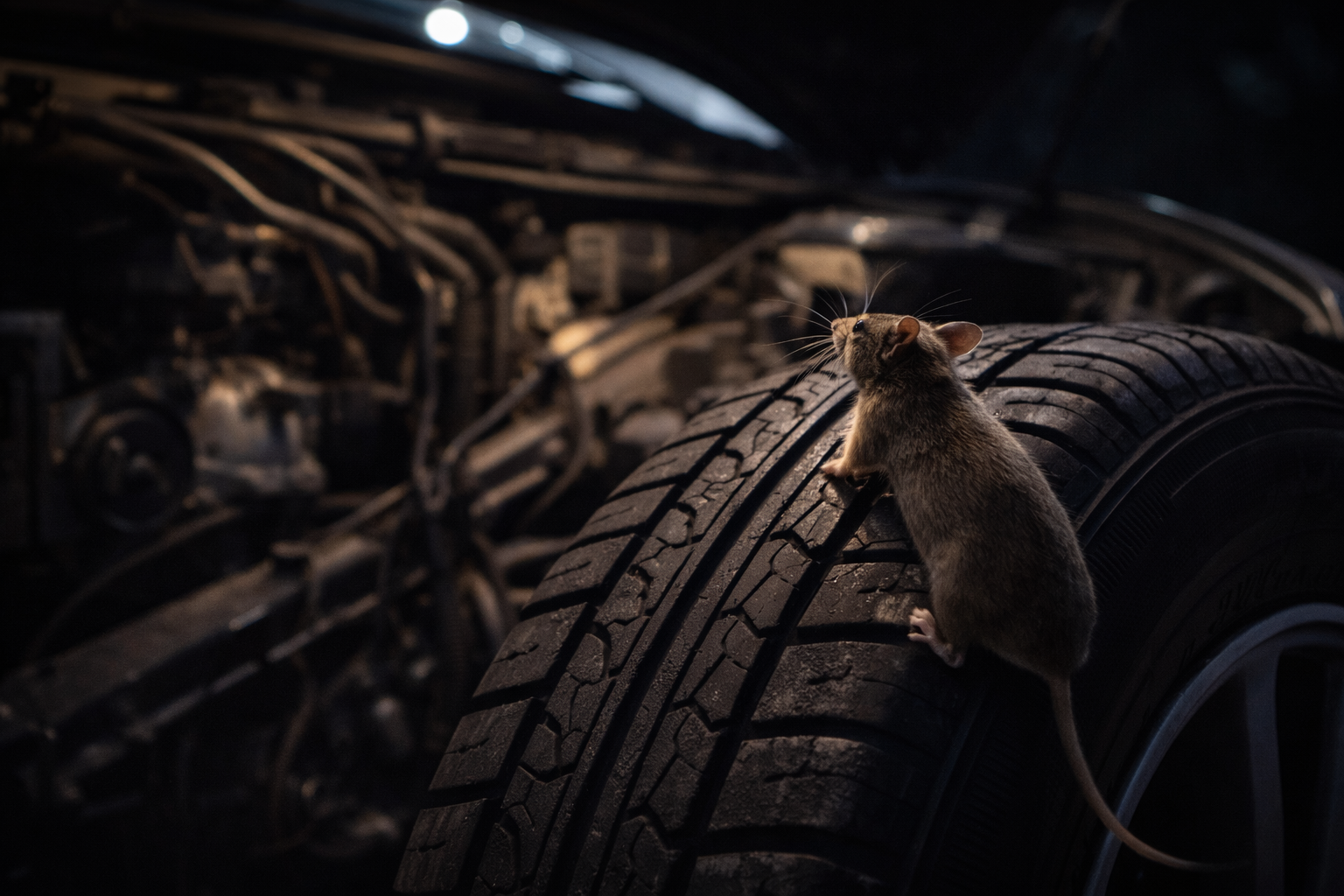
Quick answer: Mice usually reach a car’s engine compartment by climbing the tires, suspension components, nearby vegetation, stored objects or garage structures. They then enter through the open underside of the vehicle. An engine bay is not a sealed compartment, so there is rarely one hole that can simply be plugged.
The most practical way to reduce access is to remove nearby climbing routes and food sources, close rodent entry points in the garage and inspect the vehicle regularly. Mesh can help seal openings in a building, but attaching ordinary wire mesh to a vehicle can obstruct airflow or interfere with hot or moving components.
If rodents are already living under the hood, read what to do after finding a mouse nest in a car engine.
How Mice Climb Into Cars
Rodents are excellent climbers. Even though vehicles may seem sealed from the outside, mice can reach the engine compartment surprisingly easily.
The most common entry paths include:
- Climbing the tires – Mice can easily scale rubber tires and suspension components.
- Entering from underneath the vehicle – The underside of most cars has multiple openings that lead into the engine bay.
- Using nearby structures – Rodents may climb from vegetation, garages, or stored items next to the vehicle.
Once a mouse reaches the engine bay, it may begin exploring for materials to build a nest.
Where Mice Enter the Engine Compartment
Cars contain several small gaps that allow wiring, hoses, and ventilation systems to pass through the vehicle body. While these openings are necessary for the car to function, they can also serve as entry points for rodents.
Common entry areas include:
- Firewall openings – Where wiring passes between the engine and cabin.
- Air intake vents – Some rodents enter through ventilation pathways.
- Undercarriage gaps – Openings around the suspension and frame.
Because mice can compress their bodies dramatically, even very small gaps can allow them to enter.
Why Engine Compartments Attract Mice
Once inside the vehicle, the engine bay provides several things rodents want: warmth, shelter, and protection from predators.
Cars that have recently been driven remain warm for hours, especially during colder months. This warmth makes engine compartments attractive nesting locations.
Rodents chew many types of wiring, rubber, plastic, foam and insulation. Although some vehicle components may contain plant-derived materials, soy does not fully explain why mice enter engine bays or damage car wires. See our guide to soy-based wiring and rodent damage.
Signs Mice Are Getting Into Your Car
Drivers sometimes discover rodent activity only after damage occurs. However, rodents usually leave clues before serious problems appear.
Watch for these warning signs:
- Droppings under the hood
- Nesting material near the engine
- Chewed wiring insulation
- Strange smells coming from the engine bay
- Scratching sounds after parking
If you suspect rodents may already be nesting in your vehicle, see our guide on how to tell if a rodent is living in your car.
Can You Use Mesh to Keep Mice Out of a Car Engine?
Wire mesh is useful for closing rodent entry points in garages, sheds and other structures. It is much harder to use safely on a vehicle. The underside of a car contains numerous necessary openings, and mice may reach the engine bay by several routes rather than through one identifiable hole.
Do not attach hardware cloth, steel wool, expanding foam or improvised screening to the engine compartment without guidance from a qualified mechanic. These materials could obstruct cooling or ventilation, contact hot exhaust components, interfere with belts or fans, or trap debris.
Where mesh can help
- Openings in garage walls around pipes and utility lines
- Damaged garage vents that need rodent-resistant screening
- Gaps in sheds or outbuildings where vehicles are stored
- Fixed building openings that can be sealed without blocking required ventilation
The CDC recommends metal, hardware cloth or similar durable materials for larger openings in homes, garages and outbuildings. See the CDC’s rodent-exclusion guidance.
A freestanding product sold as a rat fence or rodent mesh for cars should be treated as one possible layer rather than a guarantee. Mice can climb many surfaces, and a small gap can undermine the barrier.
How to Reduce the Ways Mice Reach Your Engine
Move climbing routes away from the car
Keep stored boxes, firewood, garbage cans, vegetation, shelving and other objects away from the vehicle. These can provide shelter or an easier route onto the car.
Control rodents where the car is parked
Seal garage and outbuilding openings, store birdseed and pet food in durable containers, clean spilled food and keep garbage tightly covered. Preventing rodents from living beside the car is generally more effective than trying to seal every opening in the vehicle.
Inspect the engine compartment regularly
Look for droppings, acorns, nesting material, shredded insulation, stored food or fresh chew marks. Frequent inspection is especially important for vehicles that remain parked for long periods.
Use deterrents as a secondary layer
Sprays, pouches, under-hood devices and rodent-deterrent tape may supplement cleanup and exclusion. Compare those options in our guide to the best rodent repellents for cars.
Tools That Help Keep Rodents Out of Car Engines
If rodents are already exploring your engine bay, prevention tools can make a big difference. Most mechanics recommend combining deterrents with cleanup and blocking entry points.
Capsaicin Rodent Deterrent Tape
This specialized tape contains capsaicin — the compound that makes peppers spicy. When rodents chew on it, the taste discourages them from continuing.
Read our guide to rodent-deterrent tape for car wires.
Peppermint Rodent Repellent Spray
Peppermint oil is one of the simplest ways to make an engine bay unattractive to rodents. Many drivers spray the wheel wells and areas under the hood periodically.
Ultrasonic Engine Bay Repellers
These small devices emit sound frequencies and flashing lights that rodents dislike. They’re designed specifically for installation inside engine compartments.
What Damage Mice Can Cause
Rodent damage can be expensive because modern vehicles rely heavily on electrical wiring. Even small sections of damaged wiring can trigger dashboard warning lights or sensor failures.
In severe cases, mechanics may need to replace entire wiring harnesses. Our guide on how much rodent damage to a car costs to repair explains typical repair costs.
Preventing Rodents From Returning
Once rodents discover a warm place to nest, they may return repeatedly. Taking steps to remove attractants and block easy access can help prevent future infestations.
For a complete overview of strategies that protect vehicles, garages, and homes, see our Rodent Damage Prevention Guide.
Understanding how mice enter vehicles can help drivers stop infestations before they lead to costly repairs.
 💬
Dealy Planet
💬
Dealy Planet