
Hear Scratching in the Walls?
If you hear scratching, chewing, or movement inside walls or ceilings, pest control help may be the fastest way to identify what is inside and what to do next.
Click Here To Call A Local Pest Control Pro NOW
(833) 770-0877
 Updated: May 13, 2026
Get DealyPlanet by email Practical help with insurance claims, expensive repairs and consumer problems.
Scratching sounds at night are easy to dismiss as pipes, settling, or normal house noises — until the sounds start moving from wall to wall.
That is when the question changes from “What was that noise?” to something much less comforting:
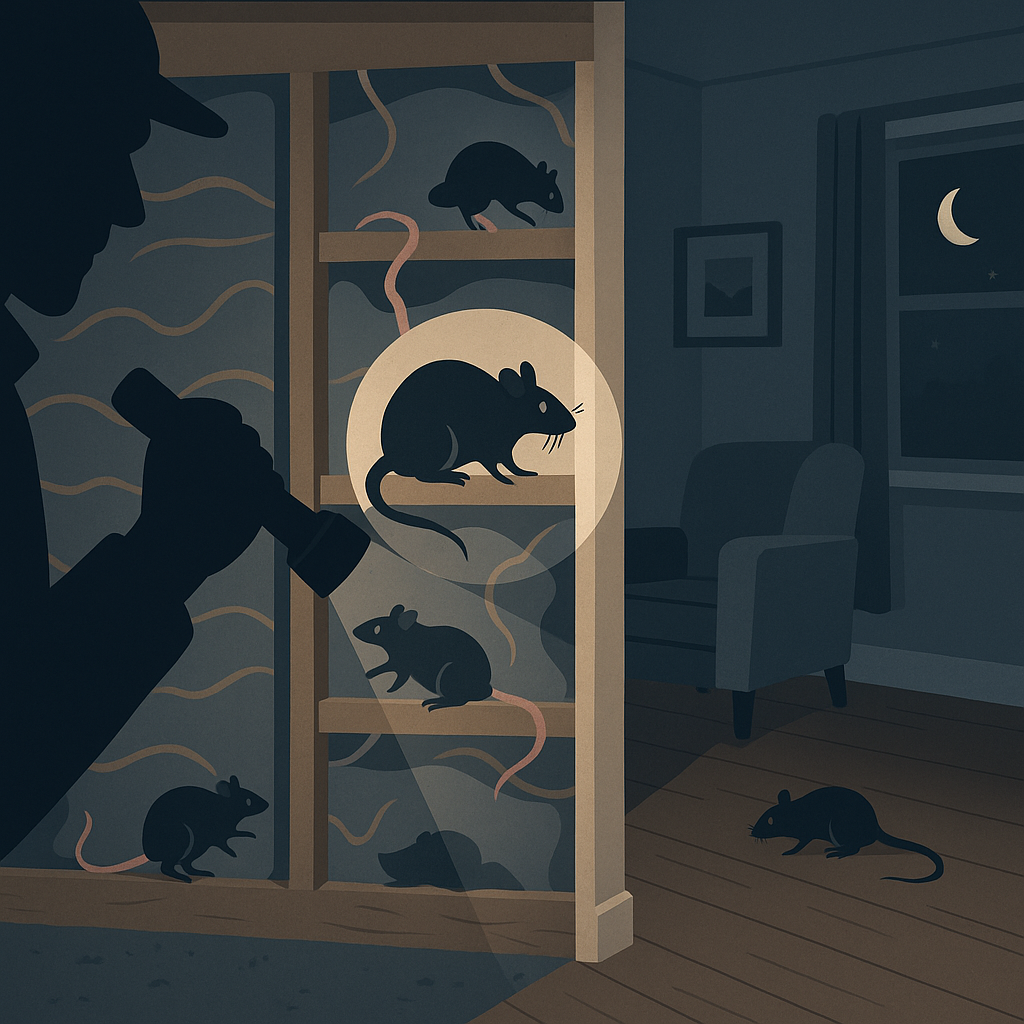
Are rats living inside the walls?
Rats can live inside wall cavities, attics, crawlspaces, basements, and utility openings long before a homeowner ever sees one. The warning signs are usually subtle at first: faint scratching, droppings near baseboards, grease marks, small holes, or a smell that seems to come from one section of the house.
The good news is that rats in walls leave fairly consistent clues. Once you know what to look for, you can stop guessing and decide whether this is still a DIY problem or something that needs professional help.
Quick Answer: The most common signs of rats in walls are nighttime scratching, chewing sounds, droppings near baseboards, greasy rub marks, small gnawed holes near pipes or vents, and a musky odor from one area. Avoid poison if rats may be inside walls, because they can die in the wall cavity. The safest plan is usually to identify entry points, seal access, and use targeted removal.
Hear Rats or Rodents in the Walls?
If you hear scratching, chewing, or movement inside walls, ceilings, an attic, or a crawlspace, a pest control professional can help identify the problem and the safest next step.
(833) 770-0877
If you suspect a broader infestation before seeing anything in the walls, this guide on how to identify a rat infestation before you see one explains the earlier warning signs homeowners often notice.
Start here: Our complete guide to stopping rodent damage covers cars, garbage, insurance, and prevention: Rodent Damage Prevention Guide
1. You Hear Scratching, Scurrying, or Chewing at Night
Rats are most active at night, so nighttime noises are one of the strongest warning signs.
Common sounds include:
- light, rapid scurrying
- scratching inside drywall
- gnawing or chewing
- thumping or movement behind a wall cavity
- occasional squeaks
If noises happen mostly between late evening and early morning, rodents are a real possibility. Pipes and heating systems tend to make more predictable sounds tied to water use, heat cycles, or temperature changes. Animal movement often feels less regular and may seem to travel.
Practical test: listen in a quiet room at night and note whether the sound moves, whether it comes from the same wall, and whether it happens repeatedly over several nights.
2. You Find Droppings Near Walls, Baseboards, or Appliances
Rats may be inside the walls, but they usually leave evidence near the places they enter, feed, or travel.
Look for droppings:
- behind the stove
- under sinks
- in the basement
- near HVAC returns
- along baseboards
- near trash areas
- behind stored boxes or clutter
Fresh droppings are usually darker and softer. Older droppings become gray, dry, and crumbly.
Garbage often attracts rats before they move closer to the house. If trash is part of the problem, see why rats love garbage cans and our guide to rat-proof garbage cans.
3. You See Grease Smudges or Rub Marks
Rats often use the same routes over and over. Their oily fur can leave dark smudges along walls, baseboards, pipes, conduits, and foundation edges.
These marks may appear near:
- drywall edges
- electrical conduits
- baseboards
- foundation walls
- utility penetrations
- holes behind appliances
If new dark streaks appear near a suspected entry point and do not wipe away easily, rats may be traveling through that area repeatedly.
4. You Find Small Holes or Gnawed Openings
Rats can chew through surprisingly tough materials. Inside a house, they often enlarge existing gaps rather than create a perfect new doorway from scratch.
Look around:
- pipes
- vents
- electrical outlets
- utility penetrations
- foundation cracks
- damaged siding
- garage corners
- crawlspace openings
A rat hole may be roughly quarter-sized or larger, often with rough edges. Mice can use smaller openings, so the size of the hole is not the only clue.
5. You Notice Electrical Problems or Chewed Wiring
Rats and mice chew constantly. If they are inside walls, that can become more than a pest problem.
Rodents may damage:
- electrical wires
- low-voltage wiring
- insulation
- HVAC lines
- ductwork
- plastic tubing
Flickering lights, tripped breakers, or unexplained electrical problems should be taken seriously if they appear alongside scratching sounds, droppings, or other rodent signs.
If rodents are also damaging vehicles, see our guides to why rodents chew car wires and rodent damage car repair cost.
6. There Is a Foul, Musky, or Sour Odor
A rat nest has a distinct smell. It may be musky, sour, warm, or stale, and it may seem strongest near one wall, corner, radiator, cabinet, or utility area.
The odor can get worse when:
- nesting material accumulates
- rats urinate in the same area repeatedly
- droppings build up
- a rat dies inside the wall
If there is a sudden rotten smell that lasts for days, a dead rodent inside a wall cavity is possible. That can create odor and insect problems, and it may require professional help if the location is difficult to access.
If you are not sure what type of animal you are hearing, this guide can help identify what may be living in your walls.
7. Your Pets Are Fixated on One Wall or Cabinet
Cats and dogs sometimes notice wall activity before people do.
If a pet repeatedly stares at, paws at, sniffs, or reacts to the same wall, cabinet, baseboard, or appliance area, it may be responding to movement or smell inside the wall cavity.
That does not prove rats are present, but it is one more clue to combine with sounds, droppings, odors, and entry points.
What to Do If You Suspect Rats in Your Walls
The goal is not just to scare rats away for a day. The goal is to remove the current animals, prevent new ones from entering, and avoid creating a worse problem inside the walls.
1. Do Not Start With Poison Inside the House
Poison can seem like the easiest answer, but it has a major downside: rats may die inside walls, ceilings, or crawlspaces.
That can lead to:
- strong odor
- flies and other insects
- hidden carcasses
- drywall removal
- sanitation problems
For wall infestations, targeted trapping and entry-point control are often safer than using poison blindly.
2. Look for Outdoor Entry Points
Rats are usually getting in from somewhere. Common entry points include:
- gaps around AC lines
- foundation cracks
- holes near gas or utility pipes
- openings behind siding
- damaged vents
- gaps under doors
- roofline openings
- crawlspace access gaps
Do not seal every opening while rats are still trapped inside. If you block the exit too early, you may drive them deeper into the house or leave animals trapped in the walls.
3. Reduce Food and Shelter Outside
Rats are much harder to remove if the property is still inviting them.
Focus on:
- trash cans with tight or locking lids
- pet food stored indoors
- birdseed and spilled feed
- wood piles away from the house
- dense vegetation against the foundation
- standing water or drainage problems
- clutter in garages, sheds, and basements
If rats are chewing through trash cans, consider upgrading to a stronger rat-resistant garbage can.
4. Use Targeted Trapping
Traps should be placed where rats are actually traveling, not randomly in the middle of a room.
Good locations may include:
- along walls
- near droppings
- near entry points
- behind appliances
- in basements or garages
- near attic or crawlspace access points
Use caution around children and pets. If traps are placed in sensitive areas, tamper-resistant boxes may be needed.
5. Call a Professional if Activity Continues
Daily movement, repeated scratching, recurring droppings, or signs of nesting usually mean the problem is bigger than one wandering rat.
A pest control or wildlife removal professional may be able to:
- identify the animal
- locate entry points
- set targeted traps
- inspect attics, crawlspaces, and wall-adjacent areas
- recommend exclusion work
- avoid trapping animals inside the walls
If the activity is inside walls or ceilings, see our guide to animal removal from walls cost.
If you are not sure whether it is time for help, read when to call pest control.
If you are hearing daily activity, call (833) 770-0877 to discuss pest control options before the problem spreads.
How Long Does It Take to Get Rats Out of Walls?
With a small problem, sealing access and targeted trapping may improve things within one to three weeks. Larger infestations can take longer, especially if food sources remain or entry points are missed.
If you remove one rat but continue hearing activity, the source problem has probably not been solved.
Related Pest Control Guides
- Complete Pest Control Guide
- What Animal Is Living in Your Walls?
- How to Get Rid of Mice in Your House
- Signs of a Rat Infestation
- When to Call Pest Control
- Rat-Proof Garbage Cans
Frequently Asked Questions About Rats in Walls
How do I know if the noise is rats or just pipes?
Rats are most active at night and often produce scratching, scurrying, or chewing sounds that change location. Pipes are usually more consistent and tied to water use, heating cycles, or temperature changes.
Should I use poison if rats are in my walls?
Most homeowners should avoid poison when rats may be inside walls because the rats can die in wall cavities, creating odor, insect problems, and possible cleanup costs.
How do rats get into walls?
Common entry points include gaps around pipes and vents, siding openings, rooflines, crawlspace gaps, utility penetrations, and foundation cracks. Rats can enlarge existing openings by chewing.
How long does it take to get rid of rats in walls?
With sealing plus targeted trapping, many infestations improve within one to three weeks. Heavier infestations can take longer if entry points, food sources, or nesting areas remain.
When should I call pest control for rats in walls?
Call pest control if you hear daily movement, find recurring droppings, smell odor from a wall, suspect a nest, or cannot identify where the rats are entering.
 💬
Dealy Planet
💬
Dealy Planet