
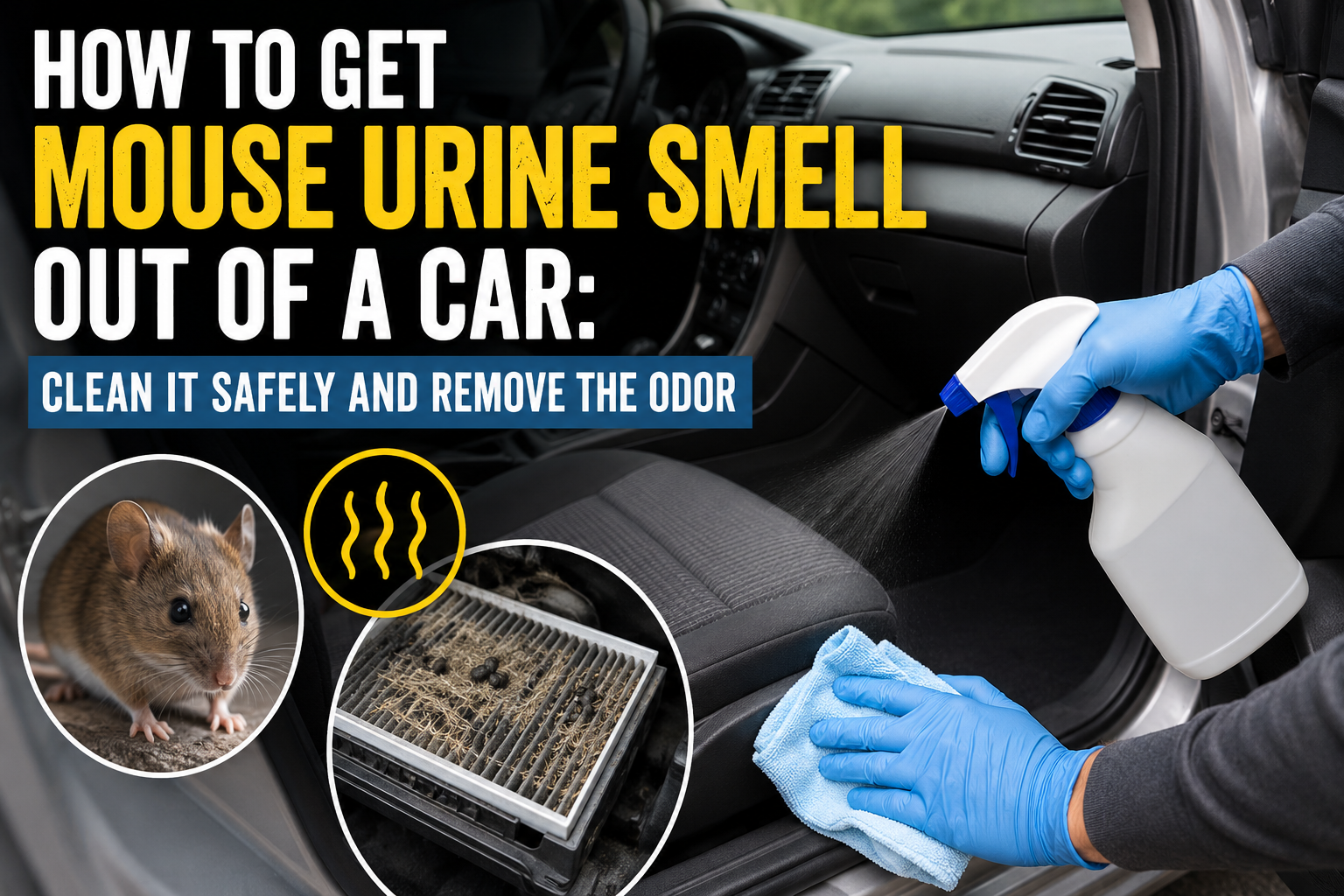
If your car smells like mouse urine, spraying air freshener into the cabin is unlikely to solve the problem. The odor usually means urine, droppings, nesting material, or another contaminated surface is still somewhere in the vehicle.
Get DealyPlanet by email Practical help with insurance claims, expensive repairs and consumer problems.
The source may be under a seat or carpet, but it can also be hidden in the cabin air filter housing, air intake, blower area, trunk, spare-tire compartment, or engine bay.
First, you must find and safely remove the contamination. Then you can work on the odor that remains.
Quick Answer: How Do You Get Mouse Urine Smell Out of a Car?
To get mouse urine smell out of a car:
- Air out the vehicle before cleaning.
- Find the contaminated area, including the cabin air filter and HVAC intake.
- Do not sweep or vacuum dry rodent waste.
- Wet urine, droppings, and nesting material with an appropriate disinfectant before removing it.
- Clean carpet and upholstery thoroughly after the contaminated material has been safely removed.
- Replace a contaminated cabin air filter.
- Treat residual odor only after the actual source is gone.
If the smell becomes much stronger when you turn on the fan or air conditioner, the problem may be inside the vehicle’s air intake, cabin filter housing, blower, or HVAC system rather than on the seats or carpet.
Before You Clean: Don’t Vacuum Mouse Droppings or Dry Urine
Rodent cleanup is different from normal car detailing.
The CDC recommends that you do not sweep or vacuum dry rodent urine, droppings, or nesting material. Disturbing dry material can put contaminated particles into the air.
For vehicles, the CDC recommends opening the hood, doors, and trunk and allowing the vehicle to air out for about 20 minutes before inspecting it.
Wear rubber or plastic gloves while cleaning. If there is extensive contamination, multiple nests, or a large amount of rodent waste, professional cleanup may be the better choice.
Step 1: Find Where the Smell Is Coming From
A mouse can urinate in one part of a vehicle while the smell seems to come from somewhere else. Before cleaning everything in sight, try to narrow down the source.
Check:
- Under the seats
- Carpet and floor mats
- Under removable cargo-floor panels
- The trunk and spare-tire well
- Seat cushions and upholstery
- The glove-box area
- The cabin air filter
- The cabin air filter housing
- The exterior HVAC/cowl air intake
- The blower-motor area
- The engine compartment
Also look for droppings, shredded paper, insulation, leaves, acorns, seeds, food, or fabric. Those can help you locate the area the mouse was using.
If you are not sure whether rodents are still using the vehicle, see our guide to the signs that a rodent is living in your car.
Step 2: Disinfect the Contaminated Material Before Removing It
Put on gloves and thoroughly wet visible urine, droppings, or nesting material with a disinfectant that is appropriate for the surface you are cleaning.
The CDC recommends using a household disinfectant or bleach solution and allowing the area to remain wet for at least five minutes, or for the amount of time specified on the disinfectant label.
In a car, be particularly careful with bleach because it can discolor or damage upholstery, carpet, plastics, finishes, and other vehicle materials. A disinfectant whose label specifically permits use on the surface you are treating may be easier to use safely.
Follow the product label and never casually combine different cleaning chemicals.
Once the material has been disinfected, wipe it up with paper towels and dispose of it. Dead rodents and nests should be handled according to the CDC’s disposal instructions.
Do not use a high-pressure air hose or sprayer to blow dry droppings or nesting debris out of an engine compartment.
Step 3: Clean Carpet and Upholstery
Once rodent waste has been safely disinfected and removed, you can deal with urine that has soaked into porous material.
The CDC recommends shampooing contaminated carpets and upholstery with an appropriate commercial product or using a commercial-grade steam cleaner or shampooer.
This is where an enzyme-based urine odor cleaner can also be useful. These products are designed to break down organic odor residue rather than simply covering the smell with perfume.
An enzyme cleaner should be considered an odor-treatment step after safe cleanup, not a replacement for disinfecting rodent waste.
Always test the cleaner on an inconspicuous portion of upholstery or carpet first.
Browse enzyme urine and odor cleaners on Amazon
Step 4: Check the Cabin Air Filter
This is one of the most important places to inspect when a car has had mice.
Mice can carry nesting material into the air-intake system or build a nest around the cabin air filter. Urine, droppings, and nesting material there can make the odor dramatically worse when the fan is running.
The CDC specifically recommends inspecting a vehicle’s air intakes and filters when rodent activity is suspected. If nesting material is found in the air-intake system, the CDC says to remove the contaminated material and replace the filter.
If your cabin filter is contaminated, do not try to save a $15 or $25 filter by deodorizing it. Replace it.
Cabin filters are vehicle-specific, so search using your exact year, make, and model:
Find replacement cabin air filters on Amazon
If the Mouse Urine Smell Comes From the Vents
A smell that appears mainly when you turn on the heat, fan, or air conditioning points toward the HVAC system.
Start with the cabin air filter and its housing. Also inspect the air intake beneath the windshield if it is accessible without dismantling the vehicle.
If those areas are clean but the smell persists, a mouse may have contaminated the blower housing, evaporator area, ductwork, or another inaccessible part of the HVAC system.
At that point, repeatedly spraying cleaner into the dashboard vents may create a new problem without reaching the contamination.
A mechanic or automotive detailer may need to remove the blower motor or other HVAC components to locate the source.
What About Mouse Urine in the Engine Compartment?
Mouse urine under the hood can usually be handled differently from contamination inside the passenger compartment, but you still should not immediately attack dry droppings with compressed air or a shop vacuum.
Air out the engine compartment and disinfect rodent waste before removing it.
Also inspect the area for:
- Chewed wiring
- Damaged insulation
- Chewed hoses
- Nesting material near belts or pulleys
- Debris around air intakes
- Food stored by rodents
If you find an actual nest, read Mouse Nest in Car Engine: What to Do Before Driving Again.
If you find wiring damage, our guide to rodent damage car repair costs explains what repairs can cost and when a wiring harness may need more extensive work.
Why Does the Smell Come Back After Cleaning?
If the car smells fine after cleaning and then reeks again a day later, there is a good chance some of the source remains.
Common reasons include:
- Urine soaked into carpet padding underneath the visible carpet
- A contaminated cabin air filter was never replaced
- Nesting material remains inside the HVAC intake
- Urine reached the blower housing or another hidden HVAC component
- Rodents are still entering the vehicle
- A dead mouse is hidden somewhere in the car
More fragrance usually will not fix any of these problems.
Should You Use an Ozone Generator?
You will find plenty of recommendations online for using ozone machines to remove mouse odors from vehicles. I would not make this the first DIY solution.
The EPA warns that ozone is a lung irritant. It also notes that ozone concentrations that remain within public-health standards are generally ineffective at removing many indoor contaminants.
Source removal, disinfection, cleaning, filter replacement, and ventilation should come first.
If a professional detailer uses specialized odor-treatment equipment, ask what process is being used and what precautions are required before people or pets re-enter the vehicle.
Things That May Hide the Smell but Won’t Fix the Problem
Be skeptical of shortcuts such as:
- Hanging several air fresheners in the car
- Spraying fragrance into the vents
- Leaving bowls of coffee grounds in the cabin
- Using baking soda without cleaning the underlying contamination
- Running an ozone generator without first finding the source
- Replacing the cabin filter while leaving a nest in the filter housing
Some of these may temporarily change what the car smells like. None removes urine or nesting material that is still hidden in the vehicle.
How to Keep the Mouse From Coming Back
Cleaning the smell is only half the job if mice still have access to the vehicle.
Remove food, birdseed, pet food, trash, cardboard, and nesting material from the garage or parking area. Inspect the vehicle regularly and look for fresh droppings or food storage under the hood.
Repellents can be used as an additional layer, but they work best when combined with reducing the rodent population and removing whatever is attracting the animals.
We compare sprays, pouches, electronic devices, and other approaches in our guide to the best rodent repellents for cars.
For a broader prevention strategy, see our Rodent Damage Prevention Guide for Cars, Homes and Garages.
When to Have the Car Professionally Cleaned
A DIY cleanup makes sense when the contamination is limited, visible, and accessible.
Consider a professional detailer, mechanic, or other appropriate specialist when:
- The urine smell remains strong after cleaning
- The odor comes from inside the HVAC system
- Rodent waste is widespread throughout the cabin
- Carpet padding or seat foam appears heavily contaminated
- A nest or dead rodent is somewhere you cannot reach
- The vehicle has been sitting with a serious infestation
- There is chewed wiring or other mechanical damage
Tell the shop that you are dealing with rodent contamination, not simply a bad odor, so they understand what needs to be inspected.
Can Mouse Urine in a Car Make You Sick?
The concern is not simply that mouse urine smells bad. Rodent urine, droppings, saliva, and nesting material can carry pathogens.
One reason the CDC warns against sweeping and vacuuming dry contamination is that disturbing it can put contaminated particles into the air.
If you become ill after significant rodent exposure and think the illness may be related, contact a healthcare provider and tell them about the rodent exposure.
Frequently Asked Questions
Will mouse urine smell eventually go away on its own?
It may become less noticeable, but waiting is a poor solution if contaminated material is still in the vehicle. Persistent or returning odor usually means the source has not been completely removed.
Can I use vinegar to remove mouse urine smell from a car?
Vinegar may change or reduce some odors, but it should not replace proper disinfection of rodent-contaminated material. Start with safe rodent cleanup, then use a surface-appropriate odor treatment if necessary.
Should I replace my cabin air filter after finding mice?
Yes if the filter or its housing has been contaminated. The CDC specifically recommends replacing the filter when nesting material is found in the vehicle’s air-intake system.
Why does my car smell like mouse urine only when the AC is on?
The cabin air filter, filter housing, exterior air intake, blower area, or HVAC system may be contaminated. Inspect the filter first. If the odor remains after replacing it and cleaning the accessible housing, the system may need professional inspection.
Can a car detailer remove mouse urine smell?
Often, particularly when the contamination is in carpet, upholstery, or accessible trim. If the source is inside the HVAC system or engine compartment, a mechanic may also be necessary.
Related Rodent and Car Guides
- Rodent Damage Prevention Guide for Cars, Homes and Garages
- How to Tell If a Rodent Is Living in Your Car
- Mouse Nest in Car Engine: What to Do Before Driving Again
- How Much Does Rodent Damage to a Car Cost to Repair?
- Best Rodent Repellent for Cars: 7 Options Compared
- Does Car Insurance Cover Rodent Damage?
Write a Reply or Comment