
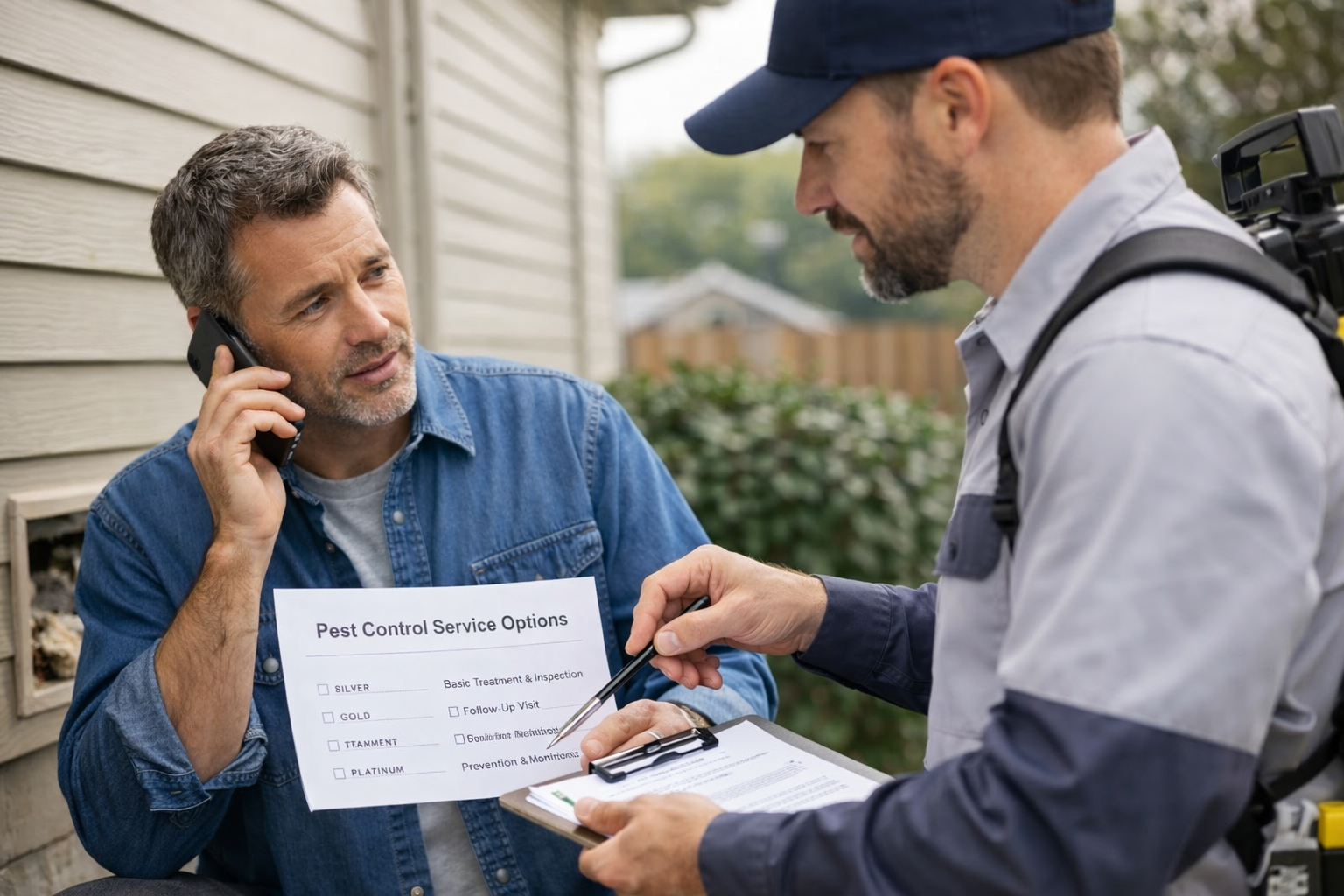
Once you decide to call pest control, the next question is which company to hire.
Get DealyPlanet by email Practical help with insurance claims, expensive repairs and consumer problems.
That decision matters. A good pest control company should do more than spray whatever pests you can see. It should help identify what is causing the problem, explain the treatment plan, and tell you what has to change so the pests do not simply come back.
The cheapest quote is not always the cheapest outcome. If the underlying problem is ignored, you may end up paying for the same infestation again.
Time and time again, I have been burned by going with the cheapest option. You would think I would have learned my lesson. Man, am I stubborn! As I’ve gotten older, I’ve finally become a little wiser and learned that the pro that gets the job done properly the first time is the one to hire- even if they cost a bit more.
Quick Answer: How Do You Choose a Pest Control Company?
Choose a pest control company that inspects before treating, explains the pest problem clearly, is properly licensed and insured, provides a written treatment plan, explains follow-up visits or guarantees, and tells you whether the source of the problem can be fixed. Be cautious of companies that offer a very low price but cannot explain what they are treating, why they are treating it, or what happens if the pests return.
| What to Check | Why It Matters |
|---|---|
| Inspection before treatment | The company should understand the source, not just the visible pests |
| Licensing and insurance | Pest control products should be used safely and legally |
| Clear treatment plan | You should know what is being treated, where, and why |
| Follow-up or guarantee | Recurring pests may require more than one visit |
| Root-cause explanation | Entry points, moisture, vents, and damage may need attention |
Need Pest Control Help?
If pests keep coming back, you hear activity in walls, or you are dealing with termites, rodents, bees, or animals inside the home, speaking with a pest control professional can help you understand your options.
Call A Local Pest Control Pro Now
(833) 770-0877
1. Start With the Problem You Actually Have
Different pest problems require different kinds of help. A company that is fine for routine ant control may not be the best choice for termites, wildlife removal, attic contamination, or rodents inside walls.
Before hiring anyone, be clear about what you are seeing:
- droppings, scratching, or chewing sounds
- mud tubes, damaged wood, or termite wings
- bees or wasps entering a vent or wall
- animals in an attic, crawlspace, or ceiling
- recurring insects despite DIY treatment
If you are not sure whether the problem is serious enough, start with our guide on when to call pest control.
2. Look for a Company That Identifies the Root Cause
The best pest control professionals do more than treat visible pests. They try to identify how the problem started.
For example, a recurring infestation might be caused by:
- an opening in the roofline or siding
- a vent without a proper screen
- wood touching soil
- moisture around the foundation
- water damage inside structural wood
- food sources or nesting material near the home
Simply treating the symptom without addressing the source often leads to the problem returning.
3. Ask What They Found During the Inspection
A reputable pest control company should be able to explain what it found and why it believes a specific treatment is needed.
Good answers sound specific:
- “We found mud tubes on the foundation near the crawlspace.”
- “There are mouse droppings behind the stove and a gap near the utility line.”
- “The bees appear to be entering through the bathroom exhaust vent.”
- “There is evidence of rodent activity in the attic insulation.”
Weak answers sound vague:
- “You just need treatment.”
- “We spray everywhere.”
- “This package covers everything.”
If the company cannot explain the problem clearly, get another opinion.
4. Ask What Treatment Plan They Recommend
A pest control company should be able to explain exactly what it plans to do.
Ask:
- Where will treatments be applied?
- What product or method will be used?
- Is this a one-time treatment or a multi-visit plan?
- Will entry points be sealed?
- Will traps, bait stations, sprays, dusts, exclusion work, or monitoring be used?
- How long should it take to see results?
If the treatment plan is unclear, the quote is hard to compare.
5. Check Licensing and Insurance
Pest control companies are usually required to be licensed in their state. Licensing helps ensure that technicians are trained to use pest control products safely and legally.
Insurance is also important. Pest control work may involve ladders, crawlspaces, attics, walls, vents, chemicals, or work around finished areas of the home. If something goes wrong, you want to know the company is covered.
Before hiring, ask:
- Are you licensed in this state?
- Are your technicians certified or supervised?
- Do you carry liability insurance?
- Can you provide proof if requested?
6. Understand the Difference Between One-Time and Ongoing Service
Some pest control problems can be handled with a targeted one-time treatment. Others require follow-up visits, monitoring, or exclusion work.
One-time service may make sense for:
- a small isolated issue
- a specific nest or entry point
- a problem that has not happened before
Ongoing service may make sense for:
- recurring rodents
- homes near woods, fields, or water
- termite monitoring
- seasonal ant, roach, or wasp problems
- rental or multi-unit properties
Do not assume a monthly plan is bad. But do not accept one automatically either. Ask why ongoing service is needed.
7. Compare Quotes by Scope, Not Just Price
Pest control quotes are only useful if you know what each quote includes.
One company may quote a lower price for a basic treatment. Another may quote more because it includes inspection, follow-up, entry-point recommendations, bait stations, or a warranty.
When comparing quotes, look at:
- inspection fee
- treatment cost
- follow-up visits
- warranty or retreatment period
- exclusion or sealing work
- cleanup or sanitation
- ongoing monitoring costs
For termites, pricing can vary widely by treatment type. See our guide to termite treatment cost.
For mice, see how much an exterminator costs for mice.
8. Ask About Guarantees or Follow-Up Visits
Many pest control companies offer some form of guarantee, but the details matter.
Ask:
- What happens if the pests come back?
- How long does the guarantee last?
- Are follow-up visits included?
- Does the guarantee cover retreatment only, or damage too?
- Are there conditions that void the guarantee?
A guarantee is only useful if you understand what it actually covers.
9. Read Reviews, But Focus on Patterns
Online reviews can be helpful, but individual reviews are not always reliable. One angry review may not mean much. A repeated pattern probably does.
Look for patterns such as:
- recurring complaints about pests returning
- consistent praise for thorough inspections
- complaints about surprise charges
- good communication before and after treatment
- technicians explaining the problem clearly
- missed appointments or poor follow-up
The most useful reviews are often the ones that mention the exact pest problem you have.
10. Be Cautious of Extremely Low Prices
Very low pricing can sometimes mean a limited treatment, a teaser rate, or a plan that does not address the source of the infestation.
That does not mean the most expensive company is always better. It means you should ask what is included.
A cheap treatment that fails may be more expensive than a higher quote that actually solves the problem.
11. Ask About Safety for Children, Pets, and Allergies
If you have children, pets, allergies, respiratory issues, or sensitive areas in the home, ask about safety before treatment begins.
Ask:
- Do people or pets need to leave during treatment?
- How long should treated areas be avoided?
- Are there special precautions for kitchens, bedrooms, or play areas?
- What products are being used?
- Are bait stations tamper-resistant?
A professional company should be comfortable answering these questions clearly.
12. Know When You Need a Specialist
Some pest problems are specialized enough that you should not hire the first general pest company you find.
You may need more specialized help for:
- termites
- bed bugs
- wildlife in walls or attics
- bats
- bees inside walls or vents
- major attic contamination
- structural pest damage
If animals are inside the wall or attic, see our guide to animal removal from walls cost.
Questions to Ask Before Hiring a Pest Control Company
Before agreeing to service, ask these questions:
- What pest do you believe is causing the problem?
- What evidence did you find?
- What treatment do you recommend?
- Is this a one-time treatment or ongoing service?
- Are follow-up visits included?
- Do you identify and recommend fixes for entry points?
- Are you licensed and insured?
- What happens if the pests come back?
- Are there safety precautions for children or pets?
- What is included in the quoted price?
If the answers are vague, keep looking.
Red Flags When Choosing Pest Control
Be careful if a company:
- will not explain the treatment plan
- pushes a long contract before inspecting
- cannot discuss licensing or insurance
- offers a price that seems too low to include real service
- does not answer questions about safety
- cannot explain what happens if pests return
- treats every problem with the same generic approach
The right company does not need to scare you into hiring them. The problem should be clear, the plan should be clear, and the price should make sense.
Related Pest Control Guides
- Complete Pest Control Guide
- When to Call Pest Control
- How Much Does Termite Treatment Cost?
- How Much Does an Exterminator Cost for Mice?
- Animal Removal From Walls Cost
- What Are Termite Mud Tubes?
Frequently Asked Questions About Choosing a Pest Control Company
Should I get multiple pest control quotes?
Yes. Comparing multiple pest control quotes can help you understand pricing, treatment options, warranties, and whether one company is recommending much more or much less than the others.
Do pest control companies inspect before treating?
Reputable pest control companies usually inspect before recommending treatment. The inspection helps identify the pest, the entry points, and whether a one-time treatment or ongoing service is needed.
Is ongoing pest control service necessary?
Ongoing service may be useful for recurring problems, termite monitoring, or homes with repeated seasonal pest issues. Many isolated problems can still be resolved with a targeted one-time treatment.
What should I ask a pest control company before hiring?
Ask what pest they found, what treatment they recommend, whether follow-up visits are included, whether the company is licensed and insured, and what happens if the pests come back.
Is the cheapest pest control company a bad choice?
Not always, but very low pricing can be a warning sign if the company cannot explain what is included. Compare the scope of service, not just the price.
Write a Reply or Comment