
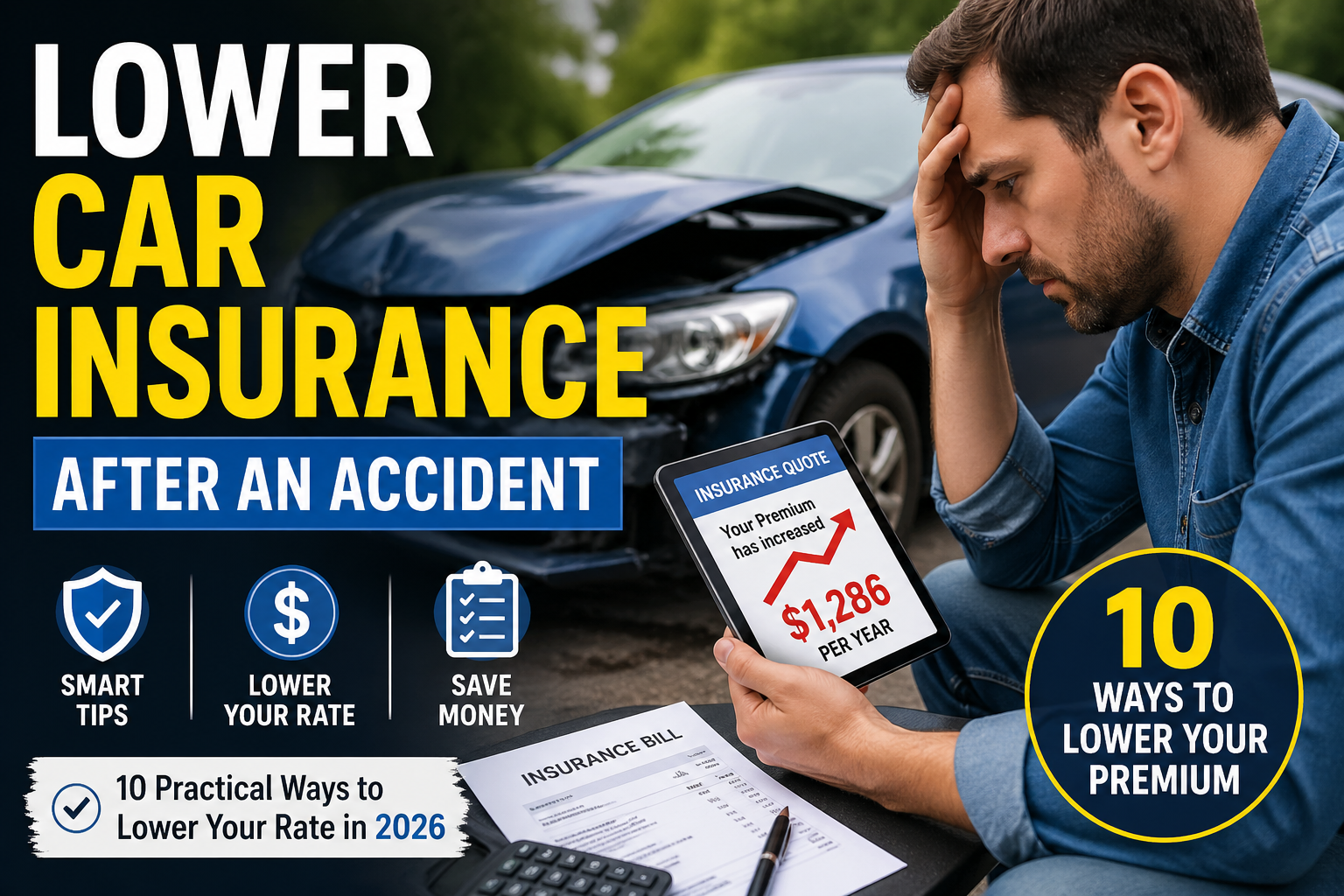
If your car insurance went up after an accident, you are not alone. Even one at-fault accident can raise your premium for years. The increase can feel especially frustrating if the accident was minor, the claim was small, or your driving record was otherwise clean.
The good news is that a higher rate after an accident is not always permanent. You may not be able to erase the accident immediately, but you can often reduce the damage by shopping around, adjusting your coverage, asking about discounts, and avoiding another claim or ticket.
Car Insurance Went Up After an Accident?
If your premium increased after an accident or claim, comparing options may help you find a better rate before your next renewal.
Call Now For Your New Auto Insurance Quote
(855) 467-0338
Quick Answer: How to Lower Car Insurance After an Accident Or Claim
To reduce car insurance after an accident, compare quotes from multiple insurers, ask about accident forgiveness, raise your deductible, remove unnecessary coverage, look for discounts, improve your credit where allowed, and avoid additional tickets or claims. Most accidents affect rates for about 3 to 5 years, but the exact impact depends on your state, insurer, fault, and claim history.
| Strategy | How It Can Help |
|---|---|
| Shop around | Different insurers price accidents differently |
| Raise your deductible | Can lower monthly premium |
| Review full coverage | May not be worth it on older cars |
| Ask about discounts | Bundling, defensive driving, pay-in-full, paperless billing |
| Wait it out | Accidents often fall off after 3–5 years |
1. Shop Around Before Your Policy Renews
Not all insurance companies punish accidents the same way. One company may raise your rate sharply after a claim, while another may offer a lower price even with the accident on your record.
This is usually the first move to make after an accident-related rate increase. Get quotes from several companies before your renewal date, especially if your current insurer increased your premium dramatically.
Also see our guide to how to lower car insurance.
2. Ask About Accident Forgiveness
Some insurers offer accident forgiveness, which may prevent your first accident from increasing your rate. It is often limited to drivers with a clean record and may need to be added before the accident happens, but it is still worth asking about.
If you already had accident forgiveness on your policy, confirm whether it was applied correctly.
3. Raise Your Deductible
Raising your deductible can lower your premium because you are agreeing to pay more out of pocket if you file a future claim.
This can make sense if you have enough savings to cover the higher deductible. It can be risky if a future claim would leave you scrambling for cash.
4. Reconsider Full Coverage on an Older Car
If your vehicle is older or not worth much, full coverage may no longer make sense. Collision and comprehensive coverage can be useful, but they become harder to justify if the premium and deductible are high compared with the value of the car.
Before dropping coverage, compare the annual cost of collision and comprehensive against the car’s actual value.
Read our guide on why full coverage auto insurance is so expensive.
5. Look for Discounts You Are Missing
After an accident, every discount matters. Ask your insurer about:
- bundling home and auto insurance
- paying the policy in full
- paperless billing
- automatic payments
- low-mileage discounts
- defensive driving discounts
- good student discounts
- multi-car discounts
These discounts may not erase the accident surcharge, but they can soften the increase.
6. Take a Defensive Driving Course
Some insurers offer a discount for completing an approved defensive driving course. In some states, a course may also help with points or driver record issues.
Before signing up, ask your insurer whether the course qualifies for a discount and how much you can save.
7. Avoid Another Accident or Ticket
One accident is bad. An accident plus a speeding ticket, second claim, or another violation can be much worse.
If your rate already increased, the next few years matter. Avoiding additional incidents is one of the most reliable ways to let your premium recover.
8. Improve Your Credit Where It Affects Insurance
In many states, insurers can use credit-based insurance scores when setting rates. Improving your credit may help lower your premium over time, though the rules vary by state.
This will not fix your rate overnight, but it can help as you continue shopping policies in future renewal periods.
9. Review Drivers on the Policy
Drivers on your policy affect your rate. If a high-risk driver no longer uses the vehicle, ask your insurer whether removing that driver would lower the premium.
If your costs jumped after adding a younger driver, read why car insurance goes up after adding a teen driver.
10. Wait for the Accident to Age Off
This is not satisfying, but time matters. Many accidents affect insurance rates for about 3 to 5 years. If you avoid new claims and violations, the surcharge may shrink or disappear at future renewals.
How Much Does Insurance Go Up After an Accident?
The increase depends on your insurer, state, fault, claim amount, prior driving record, and whether you had accident forgiveness. A small not-at-fault accident may have little effect. A serious at-fault accident can lead to a much larger increase.
We are building a separate guide on how much car insurance increases after an accident, which will cover average percentage increases and cost examples in more detail.
Should You Switch Car Insurance Companies After an Accident?
Often, yes. At minimum, you should compare quotes. Your current insurer already knows about the accident and may price you harshly at renewal. Another insurer may still charge more because of the accident, but the final price could be lower.
Do not cancel your current policy until the new one is active. A coverage lapse can make insurance even more expensive.
Can You Remove an Accident From Your Insurance Record?
Usually not immediately. If the accident is accurate, you generally have to wait for it to age off. But you should check your driving record and claims history for mistakes.
If an accident is incorrectly listed as at-fault, duplicated, or tied to the wrong driver, dispute it with the insurer or reporting agency.
Auto Insurance After An Accident: What Should You Do First?
If your car insurance went up after an accident, start by shopping around before your next renewal. Then review your deductible, coverage, discounts, and drivers on the policy.
You may not be able to undo the accident right away, but you can avoid overpaying for the next several years.
If your insurance rate increased after an accident and you are not sure whether switching companies would help, call (855) 467-0338 to compare auto insurance options.
Frequently Asked Questions About Reducing Car Insurance After an Accident
How long does an accident affect car insurance?
An accident usually affects car insurance for about 3 to 5 years, depending on your state, insurer, and whether the accident was at fault.
Will my car insurance go down after 3 years?
Often, yes. Many insurers reduce or remove accident surcharges after several claim-free years, though timing varies by company and state.
Should I switch insurance companies after an accident?
It is worth comparing quotes. Some insurers penalize accidents more heavily than others, so switching may lower your rate.
Can accident forgiveness lower my rate?
Accident forgiveness may prevent your first accident from raising your premium, but it usually must already be part of your policy before the accident.
What is the fastest way to lower insurance after an accident?
The fastest option is usually to compare quotes from multiple insurers before your renewal date. Raising your deductible or adjusting coverage may also reduce the premium quickly.
Write a Reply or Comment