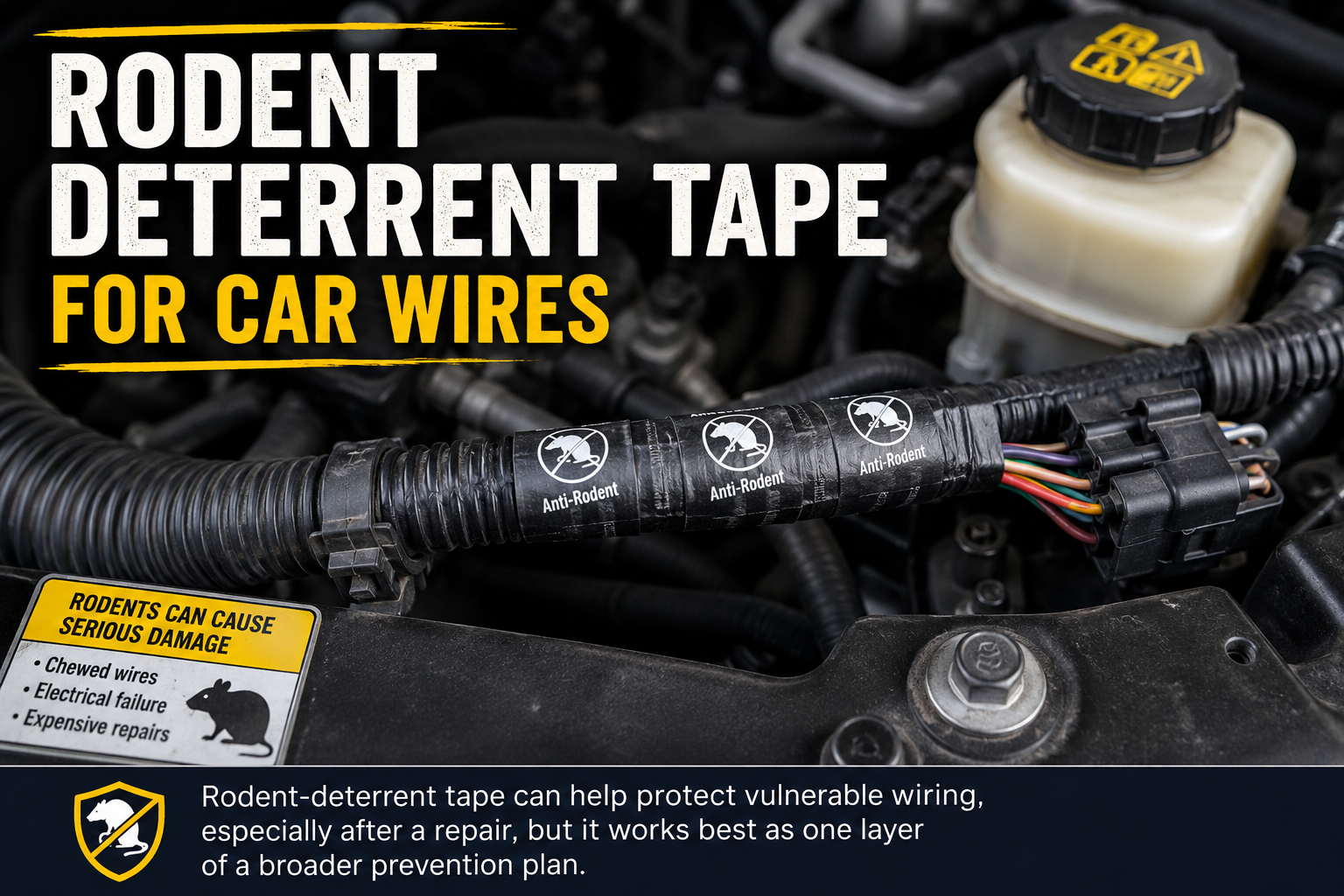
There are few car problems more irritating than rodent damage.
The car worked yesterday. Today it has warning lights, won’t start, or is suddenly throwing strange electrical errors. Then the mechanic calls and says the problem is not the battery, not the alternator, not some mysterious computer failure.
Something chewed the wires.
Once that happens, the obvious question is how to stop it from happening again. That is where rodent deterrent tape comes in. Sometimes called capsaicin tape, anti-rodent tape, or spicy wiring tape, it is meant to make vulnerable wires less appealing to chew.
It can help. But it is not a magic force field around your engine bay.
Rodent-deterrent tape is best used as one layer of protection, especially after a repair or around a wiring harness that has already been attacked. If mice, rats, squirrels, or other rodents are nesting near your vehicle, the tape alone probably will not solve the larger problem.
Quick Answer: Does Rodent Deterrent Tape Work?
Rodent-deterrent tape may help protect car wires by making the wrapped area less pleasant for rodents to chew. The best-known versions use capsaicin, the compound that gives chili peppers their heat. But the tape only protects the wires it actually covers. It does not remove food, shelter, warmth, nesting material, or the reason rodents found your car attractive in the first place.
| Question | Short Answer |
|---|---|
| Does capsaicin tape stop rodents? | It may discourage chewing on wrapped wires, but it is not a complete rodent-control plan. |
| Where is it most useful? | On repaired wiring, exposed harnesses, and repeat chew areas in the engine bay. |
| Can you wrap every wire? | Usually no. Access, heat, moving parts, and future service access all matter. |
| Is it better than spray? | It lasts longer in specific spots, but sprays may cover broader areas. |
| Should it be used alone? | No. Use it with cleaning, parking-area changes, and other deterrents. |
What I would buy based on the problem:
- Wires already chewed: ask your mechanic whether rodent-deterrent tape makes sense on the repaired or vulnerable wiring.
- Rodents keep returning to one parked car: add an under-hood ultrasonic and LED repeller as one layer.
- Early prevention around the engine bay: use peppermint rodent spray or Fresh Cab pouches.
- Garage or driveway activity: combine cleanup with an outdoor deterrent such as the ASPECTEK Yard Sentinel.
Rodent tape is most useful after you know where the chewing happened. It protects specific wires, not the entire vehicle.
What Is Rodent Deterrent Tape?
Rodent-deterrent tape is a protective tape used around wiring or wiring harnesses that rodents might chew. The most commonly discussed version is Honda’s anti-rodent wiring tape, part number 4019-2317, which is sold through Honda parts channels and described as anti-rodent engine wiring harness tape. Honda parts listing.
This is not just ordinary electrical tape with better marketing. The appeal is that it is associated with capsaicin, the same “hot pepper” compound that makes spicy food spicy. The theory is simple enough: wrap the wire, make chewing unpleasant, and hope the rodent moves on.
That is a reasonable idea. It is also a limited one.
A mouse does not look at a wrapped wiring harness and decide to respect your boundaries. The tape helps where it is installed. Nearby insulation, plastic, foam, and unwrapped wiring are still available for destruction.
Best fit: rodent-deterrent tape is for a specific problem: a wire, harness, or repaired area that rodents have already chewed or are likely to chew again.
Not best fit: general garage prevention, trash problems, food sources, nesting areas, or rodents living near the vehicle. For those, start with cleanup and broader deterrents.
When Rodent Tape Makes Sense
Rodent-deterrent tape makes the most sense when you already know where the problem is.
Good use cases include:
- after a mechanic repairs chewed wires
- around a wiring harness that was previously damaged
- near a known rodent entry or nesting area in the engine bay
- on exposed wiring that is easy to reach safely
- as a targeted add-on to other rodent prevention steps
The best time to think about it is often during a repair. If the damaged harness is already exposed, it may be easier for the mechanic to wrap the vulnerable section before everything is put back together.
That does not guarantee the rodent will never return. It just makes the previously damaged area less inviting.
If you are still trying to understand why rodents chew vehicle wiring in the first place, read our guide to why rodents chew car wires.
When Rodent Tape Is Not Enough
Rodent tape is not enough if the vehicle is still parked in a place rodents love.
That includes:
- garages with pet food, birdseed, or trash nearby
- driveways near dense brush, wood piles, or clutter
- cars that sit unused for long periods
- vehicles parked near garbage cans or compost
- engine bays that already contain nesting material
- areas where rodents have easy shelter and food
If the environment is still attractive, tape may protect one section while the rodents chew somewhere else. That is why this should be part of a layered plan, not the entire plan.
For a broader comparison of sprays, pouches, ultrasonic devices, and other options, see our guide to the best rodent repellents for cars.
Rodent Tape vs. Spray, Pouches, and Ultrasonic Devices
Different deterrents solve different parts of the same problem. Rodent tape protects a specific wire or harness. Sprays and pouches cover broader areas. Ultrasonic devices may help around a parked car or garage. Cleanup removes the reasons rodents are there in the first place.
| Option | Best For | Main Weakness | Product Path |
|---|---|---|---|
| Rodent-deterrent tape | Protecting a repaired or vulnerable wire harness | Only protects the area it covers | Check rodent tape |
| Rodent repellent spray | Broader engine-bay or parking-area prevention | Needs reapplication after heat, rain, or cleaning | Check peppermint spray |
| Scent pouches | Garages, parked cars, cabins, sheds, and storage areas | May fade and may not stop determined rodents | Check Fresh Cab pouches |
| Under-hood ultrasonic repeller | Repeat rodent activity around the same parked car | Results vary, and placement matters | Check under-hood repeller |
| Outdoor ultrasonic deterrent | Garages, driveways, sheds, and outdoor activity near the car | Does not fix food, shelter, or trash problems | Check ASPECTEK Yard Sentinel |
| Cleaning and exclusion | Removing the reason rodents are there | Requires ongoing attention | Start with trash, food, nesting material, and parking-area cleanup |
Rodent tape is best for a specific known weak spot: “They chewed this harness.” Sprays and pouches are broader. Ultrasonic devices may help around a parked car or garage. Cleaning and exclusion are the foundation. If you skip the foundation, every product has to work harder.
Can You Install Rodent Tape Yourself?
Sometimes. But this is one of those jobs that can look simpler than it is.
Engine bays include hot surfaces, moving parts, belts, fans, sensors, clips, and wiring that may be difficult to reach. You do not want tape interfering with connectors, heat dissipation, service access, or anything that moves.
DIY installation may be reasonable when:
- the wire or harness is easy to reach
- the area is away from moving parts
- the area is not exposed to extreme heat
- you are not covering connectors that need service access
- you understand what you are wrapping
If the wiring was already damaged, ask the mechanic whether rodent-deterrent tape makes sense around the repaired harness. It may be easiest and safest to apply while the repair area is already exposed.
If you are not sure, ask. A bad tape job in the wrong part of the engine bay can create a new problem while trying to prevent the old one.
Does Rodent Tape Help With Soy-Based Wiring?
Maybe, but it does not settle the soy-wiring debate.
Many drivers blame soy-based or plant-based wiring insulation for rodent damage. The reality is more complicated. Rodents chew many materials, including plastic, rubber, foam, and petroleum-based insulation. Engine bays are warm, sheltered, and full of chewable things.
Rodent tape may help protect vulnerable wiring regardless of why the rodent started chewing. But it does not prove that soy-based wiring is the only reason rodents damage modern cars.
For more detail, read our guide to soy-based wiring and rodents.
What To Do After Rodents Chew Your Car Wires
If rodents have already damaged your wiring, start with the repair. Then think prevention.
- Get the damage diagnosed: Warning lights, starting problems, and strange electrical behavior can come from chewed wires.
- Ask what was chewed: The location of the damage tells you where prevention matters most.
- Consider rodent tape on repaired areas: It may help reduce repeat chewing in the same spot.
- Clean the engine bay: Remove nesting material, food debris, and droppings if safe to do so.
- Change the parking environment: Remove nearby food, clutter, brush, and trash attractants.
- Use layered deterrents: Tape, sprays, pouches, and monitoring work better together than alone.
If you are trying to understand repair bills, see our guide to rodent damage car repair cost.
What I Would Do First
If rodents already chewed the wiring, I would repair the damage first. Then I would ask the mechanic whether rodent-deterrent tape makes sense on the repaired harness or the nearby vulnerable wiring.
If I saw droppings, nesting material, or signs of rodents but no wiring damage yet, I would start with cleanup, peppermint spray or pouches, and regular engine-bay checks.
If the same car keeps attracting rodents in the same parking spot, I would add an under-hood ultrasonic repeller and look closely at the garage, driveway, shed, trash area, birdseed, pet food, and nearby clutter.
My order of operations: repair first, protect the known weak spot, clean the parking area, then add broader deterrents.
Is Rodent Deterrent Tape Worth It?
Rodent-deterrent tape can be worth it if you have a known wiring problem, a recently repaired harness, or repeat damage in the same area. It is a targeted product for a targeted problem.
It is less useful if you expect it to protect the whole vehicle by itself.
The best case for rodent tape is simple: a relatively small additional cost after a repair may help protect the exact area that was already attacked.
The worst case is also simple: buying tape, wrapping a few easy-to-reach wires, and ignoring the garage full of food, trash, and nesting material that attracted rodents in the first place.
Used that way, it is not a prevention strategy. It is spicy decoration.
Related Guides
- Best Rodent Repellents for Cars
- Why Rodents Chew Car Wires
- Soy-Based Wiring and Rodents
- Rodent Damage Car Repair Cost
- How Mice Get Into Car Engines
Frequently Asked Questions About Rodent Deterrent Tape
Does capsaicin tape stop rats and mice from chewing car wires?
Capsaicin tape may discourage rodents from chewing the wires it covers, but it does not remove the reason rodents are in the engine bay. It works best as one layer of prevention.
Can rodent tape be used on any car?
Rodent tape can be used around some accessible wiring areas, but installation depends on the vehicle, heat exposure, moving parts, and service access. Ask a mechanic if you are unsure.
Is rodent tape better than spray?
Rodent tape is better for specific wires or harnesses. Spray is better for broader coverage. Many drivers use more than one deterrent.
Should I use rodent tape after a wiring repair?
That is one of the best times to consider it. If the damaged area is already exposed, a mechanic may be able to wrap vulnerable wiring before the repair is finished.
Does rodent tape fix the soy-based wiring problem?
No. Rodent tape may help protect wiring, but it does not prove or disprove whether soy-based materials are the reason rodents chewed the wires.
Write a Reply or Comment