
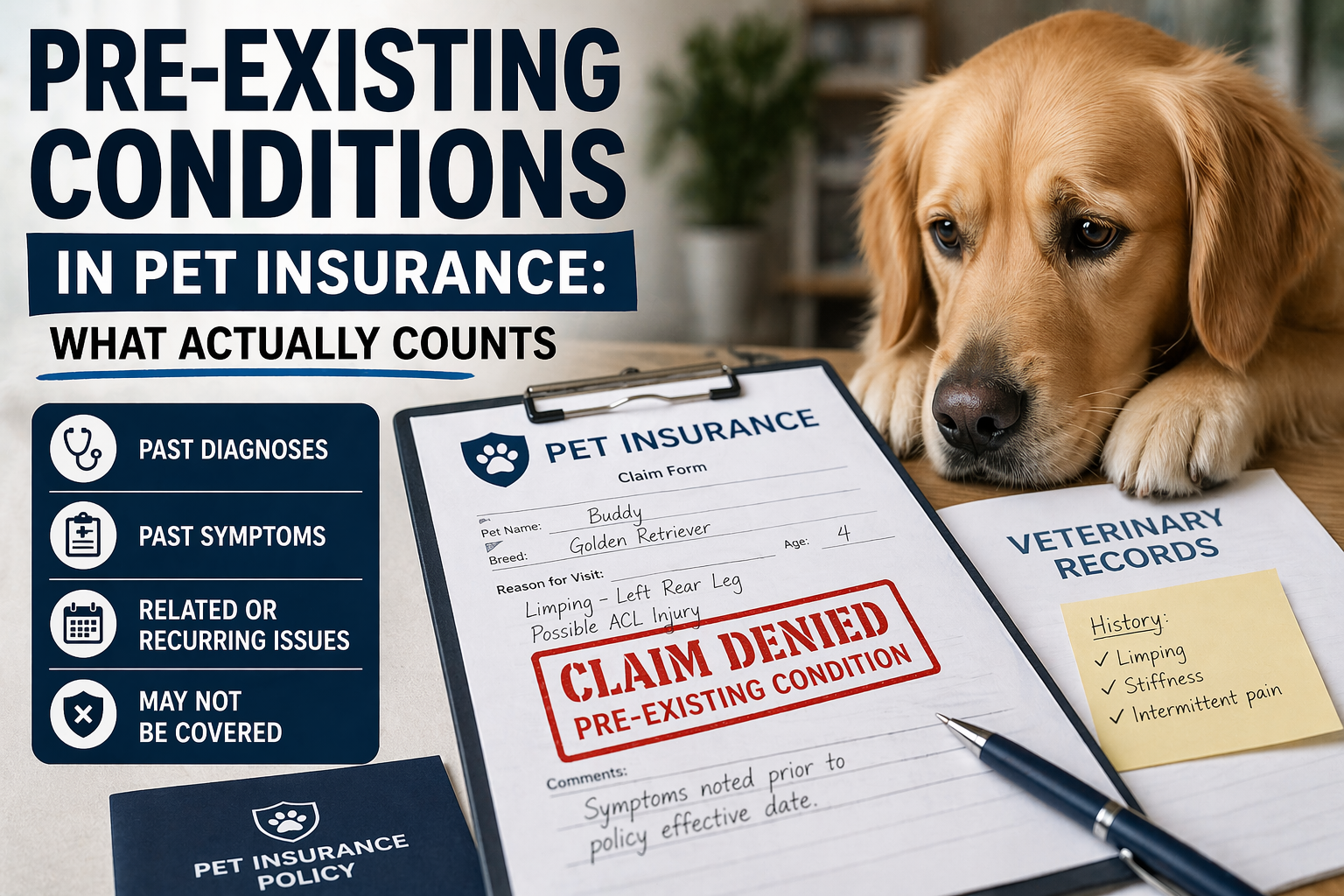
Most people assume they understand what a “pre-existing condition” means in pet insurance.
If your dog or cat has already been diagnosed with something before you enroll, it will not be covered. That part seems straightforward.
But the reality is much broader—and much more frustrating.
In many cases, pet insurance companies can deny claims based on symptoms, patterns, or medical history that go far beyond a formal diagnosis.
If you have not looked closely at how these policies work, this is one of the biggest reasons coverage may not deliver what you expect. As we explained in our breakdown of when pet insurance is not worth it, exclusions like these can dramatically reduce the value of a policy.
Quick Answer: What Is a Pre-Existing Condition in Pet Insurance?
A pre-existing condition is any illness, injury, or symptom that occurred before your pet insurance policy became active. This can include diagnosed conditions, as well as signs or symptoms that appeared before coverage began—even if they were not formally diagnosed at the time.
That last part is where many pet owners get caught off guard.
What Actually Counts as a Pre-Existing Condition?
Most policies define pre-existing conditions more broadly than people expect.
1. Diagnosed Conditions
This is the obvious category. If your pet has already been diagnosed with a condition before you enroll, it will almost always be excluded from coverage.
Examples include:
- arthritis
- diabetes
- chronic allergies
- heart disease
2. Symptoms Before Diagnosis
This is where things become less clear.
If your pet showed symptoms before your policy started—even if you did not know what they meant at the time—the insurer may classify the condition as pre-existing.
For example:
- limping before an ACL tear is diagnosed
- digestive issues before a formal diagnosis
- skin irritation before identifying allergies
This is closely tied to waiting periods in pet insurance, because symptoms that appear too early can permanently affect coverage.
3. Recurring or Related Conditions
Insurers may also link new issues to past ones.
If your pet had a problem in the past, a similar issue later may be considered related and therefore excluded.
This can include:
- repeated infections
- recurring injuries
- chronic conditions that flare up over time
Even if the new issue seems separate to you, the insurer may treat it as part of an ongoing condition.
How Insurance Companies Use This to Deny Claims
This is where expectations and reality often diverge.
Many pet owners assume that once they have coverage, future issues will be handled. But insurers rely heavily on pre-existing condition definitions when evaluating claims.
Common situations include:
- linking a new diagnosis to earlier symptoms
- reviewing veterinary history in detail
- using broad definitions of “related conditions”
The result is that claims you expect to be covered may be denied based on how the policy interprets your pet’s medical history.
Real-World Examples
These scenarios come up frequently:
- Your dog limps once before enrollment. Months later, an ACL injury is diagnosed. The insurer may treat it as pre-existing.
- Your cat has occasional digestive issues. Later, a chronic condition is diagnosed. The earlier symptoms may trigger an exclusion.
- Your pet had a minor skin issue before coverage. Future allergy-related treatments may not be covered.
In each case, the owner may feel blindsided—even though the policy technically allows the insurer to deny the claim.
Why This Matters More Than You Think
Pre-existing condition rules are one of the biggest factors that determine whether pet insurance is actually useful.
If a condition is excluded:
- you pay out of pocket
- future related treatments may also be excluded
- the value of your policy drops significantly
This is why understanding exclusions is just as important as understanding premiums or reimbursement rates.
How to Avoid Getting Burned
If you are considering pet insurance, timing and awareness are critical.
- Enroll early: The fewer prior symptoms, the better
- Review your pet’s medical history: Know what could be flagged
- Read policy definitions carefully: They vary by provider
- Understand waiting periods: Early symptoms can create long-term exclusions
Even with these precautions, you cannot eliminate all risk. But you can reduce surprises.
Does This Mean Pet Insurance Is Not Worth It?
Not necessarily.
But it does mean the value depends heavily on your situation.
If your pet is young and healthy, enrolling early can avoid many of these issues.
If your pet already has a medical history, the exclusions may limit how useful the policy really is.
This is one of the key reasons some pet owners decide that pet insurance is not worth it for their situation.
The Bottom Line
Pre-existing conditions in pet insurance are not just about past diagnoses. They include symptoms, patterns, and related issues that can affect coverage long after you enroll.
If you do not understand how these rules work, you may expect coverage that never actually applies.
That does not make pet insurance a bad product. But it does mean you need to evaluate it carefully before assuming it will protect you in every situation.
Related Pet Insurance Guides
Frequently Asked Questions
Does pet insurance cover pre-existing conditions?
In most cases, no. Pre-existing conditions are typically excluded from coverage.
What counts as a pre-existing condition?
Any condition, symptom, or medical issue that occurred before your policy became active may be considered pre-existing.
Can a condition become pre-existing after I enroll?
Yes. If symptoms appear during a waiting period, the insurer may classify the condition as pre-existing going forward.
Are all pre-existing conditions permanent?
Some insurers may cover conditions that are considered “curable” after a symptom-free period, but many exclusions are permanent.
Write a Reply or Comment