
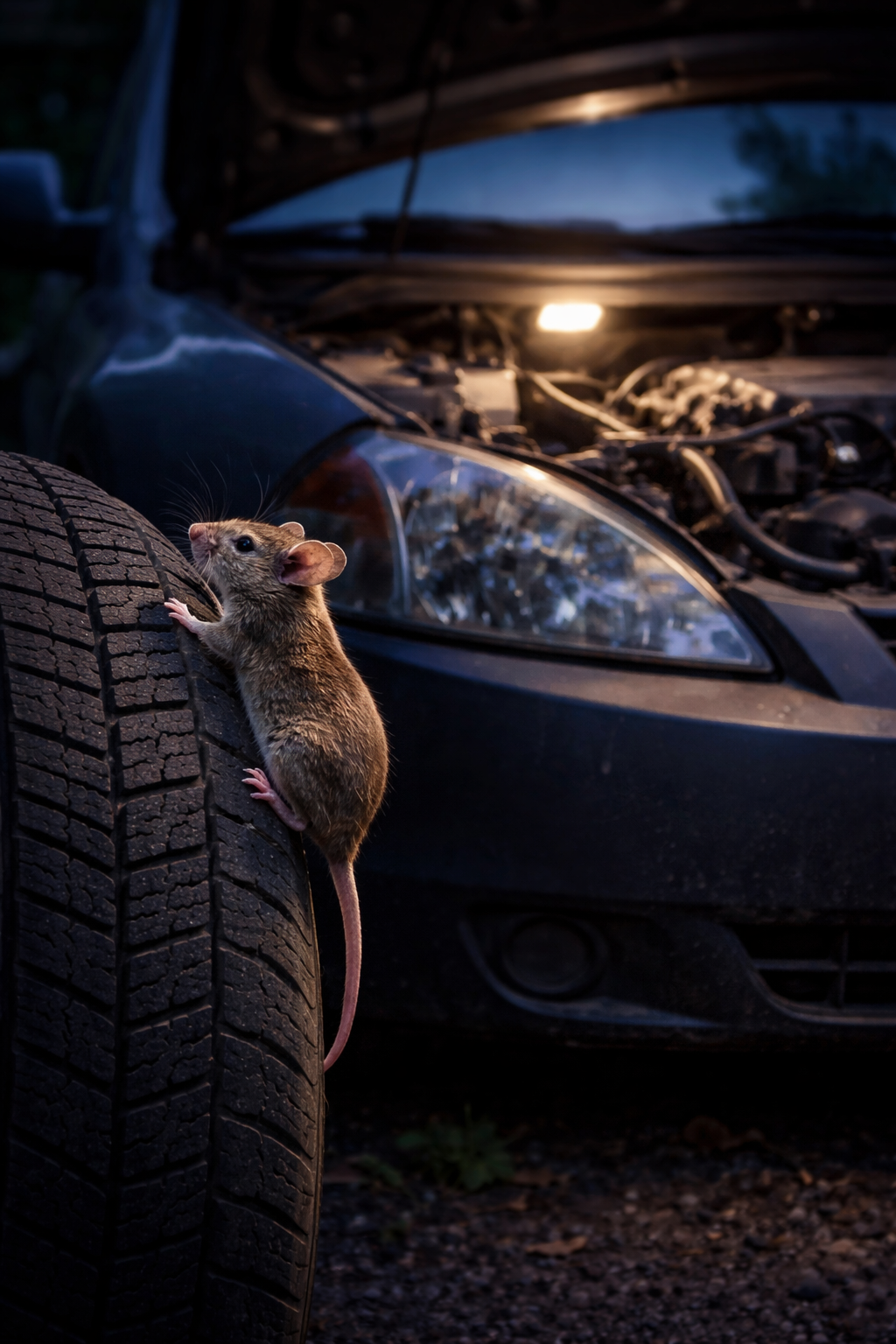
Many drivers discover a rodent problem only after something stops working in their car. A warning light appears, the engine runs poorly, or a mechanic finds chewed wiring under the hood. In many cases, the cause is mice nesting in the engine compartment.
Cars provide warmth, shelter, and protection from predators. Once mice discover a parked vehicle, they may return repeatedly and build nests inside the engine bay.
The good news is that several practical steps can dramatically reduce the chances that mice will move into your car.
Why Mice Get Into Cars
Engine compartments are attractive to rodents for several reasons. After a car has been driven, the engine bay remains warm for hours. This warmth is especially appealing during cooler weather.
Mice are also skilled climbers. They can easily scale tires or suspension components and squeeze through very small openings.
If you’re curious how this happens, our guide on how mice get into car engines explains the most common entry points.
Signs Mice May Already Be in Your Car
Before focusing on prevention, it’s important to know whether mice are already nesting in your vehicle.
Common warning signs include:
- Small black droppings under the hood
- Nesting material such as leaves or shredded insulation
- Strange smells from the engine compartment
- Chewed wiring insulation
- Scratching sounds after parking the car
If you notice these signs, see our article on how to tell if a rodent is living in your car.
Keep the Area Around Your Car Clean
One of the most effective prevention methods is removing things that attract rodents in the first place.
Mice are often drawn to garages and parking areas where food is available. Garbage containers, pet food, bird seed, and other food sources can attract rodents that later explore nearby vehicles.
Keeping trash sealed and reducing clutter around parking areas makes the environment less appealing to mice.
Inspect Your Engine Bay Periodically
Regular inspections can help detect rodent activity before it causes expensive damage. Drivers who frequently park outside or near wooded areas may want to check under the hood periodically.
Look for nesting material, droppings, or chewed insulation around wiring harnesses.
Finding early signs of rodent activity allows you to take action before serious damage occurs.
Use Rodent Deterrents
Some drivers use deterrent products to make engine compartments less attractive to rodents.
One commonly recommended solution is capsaicin-based deterrent tape. This tape contains the same compound that makes peppers spicy, discouraging rodents from chewing wiring harnesses.
See the rodent deterrent tape commonly used by mechanics
Deterrents are most effective when combined with other prevention steps such as cleaning parking areas and removing food sources.
Check for Nests Before Driving
If a car has been parked for an extended period, it’s wise to inspect the engine bay before driving. Mice can build nests surprisingly quickly, sometimes overnight.
Our article on what to do if you find a mouse nest in your car engine explains the steps to take if you discover one.
How Expensive Rodent Damage Can Be
Rodent damage can be surprisingly costly. Modern vehicles rely heavily on electrical wiring for sensors, computers, and safety systems. Even small amounts of damage can trigger multiple warning lights or system failures.
Repairs can range from a few hundred dollars to several thousand depending on the wiring harness involved.
Our guide on how much rodent damage to a car costs to repair explains typical repair costs drivers face.
Preventing rodents from entering your vehicle in the first place is almost always easier and cheaper than repairing the damage after it occurs.
Write a Reply or Comment