
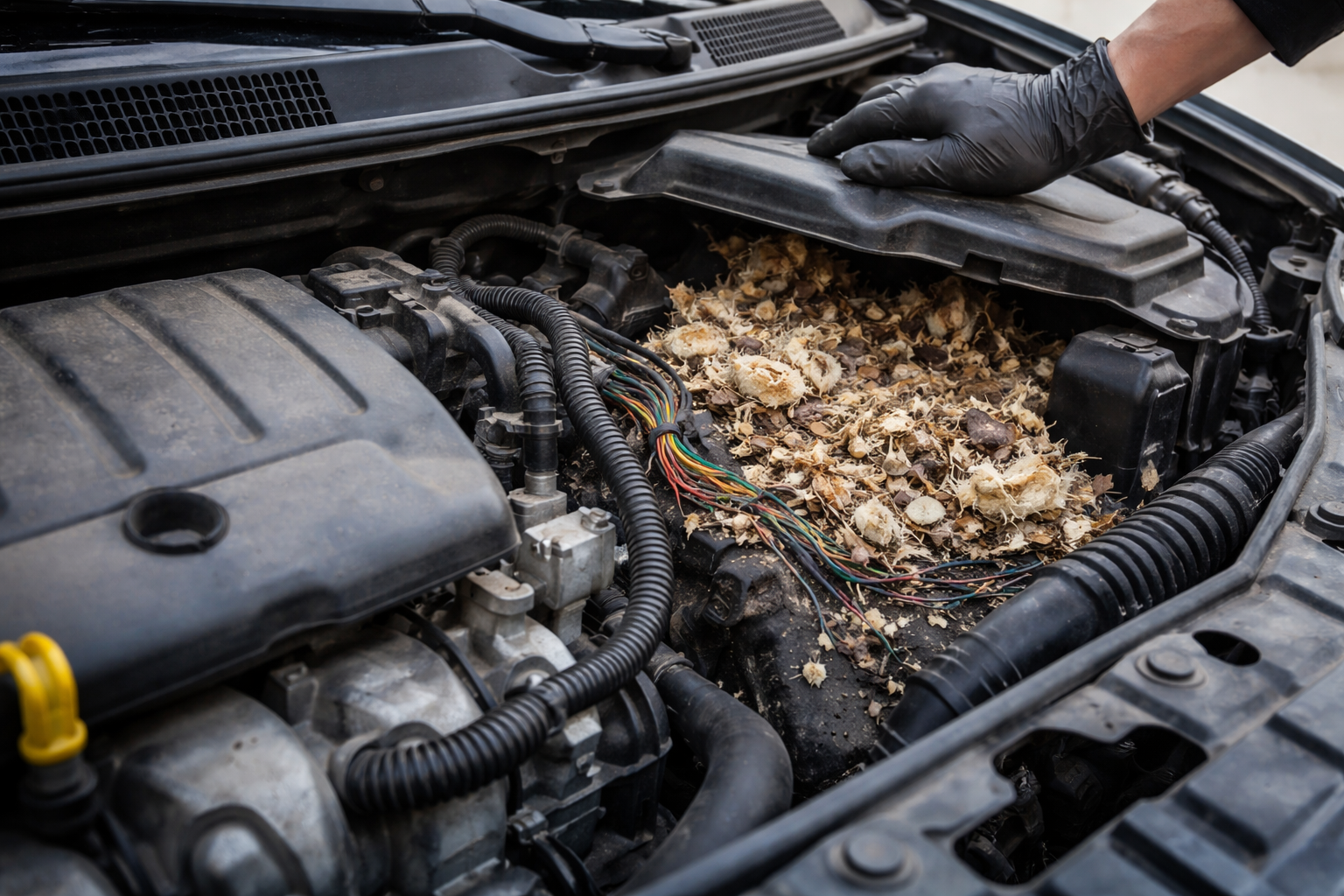
Quick Answer: Common signs of rodents in your car include droppings, chewed wires, nesting materials, strange smells, and unusual noises. If you notice these signs, you should act quickly to prevent further damage.
Many drivers discover rodent damage to their vehicle only after something stops working. A warning light appears on the dashboard, the engine runs strangely, or a mechanic discovers chewed wiring under the hood.
But rodents usually leave clues long before serious damage occurs. Mice and rats often nest inside parked vehicles because engine compartments provide warmth, shelter, and protection from predators.
If you know what to look for, you may be able to spot the signs early and prevent expensive repairs.
Signs a Rodent May Be Living in Your Car
Rodents rarely stay completely hidden. Even when they are nesting inside a vehicle, they usually leave behind visible evidence.
Common signs include:
- Droppings under the hood – Small black droppings near the engine or firewall are often the first sign of mice.
- Nesting material – Rodents frequently collect leaves, paper, insulation, or fabric to build nests.
- Chewed wiring or hoses – Rodents chew constantly to wear down their teeth.
- Strange smells – Nesting material and droppings can create a noticeable odor inside the engine bay.
- Scratching noises – Some drivers hear movement under the hood after parking the vehicle.
- Unexpected dashboard warning lights – Electrical damage caused by chewing can trigger sensors or warning lights.
If you notice chewed wiring or electrical problems, our guide on how much rodent damage to a car costs to repair explains what repairs typically cost.
Where Rodents Hide Inside Vehicles
Rodents prefer tight, sheltered spaces where they feel protected. In vehicles, the most common hiding spots include:
- Engine compartment – The warmest and most common nesting location.
- Cabin air filter area – Often filled with soft material rodents can use for nests.
- Glove box or interior panels – Rodents occasionally enter the passenger cabin.
- Trunk compartments – Especially if food or pet supplies are stored there.
- Underbody cavities – Some animals climb up from beneath the vehicle.
Once rodents discover a safe hiding spot, they may return repeatedly.
If you want to reduce the chances of repeat visits, our guide on how to keep rodents out of your car engine covers the most practical prevention steps.
How Rodents Get Into Cars
Rodents are surprisingly good climbers. Mice can squeeze through openings as small as a dime, and rats can enter through small gaps around wiring or ventilation areas.
They often climb into engine compartments by:
- Climbing the tires
- Entering from underneath the vehicle
- Using nearby vegetation or debris as access points
Many drivers are surprised to learn how easily rodents can reach the engine bay. Our article on why rodents chew car wires explains why once they enter, wiring often becomes a target.
What To Do If You Find Signs of Rodents
If you suspect rodents are nesting in your vehicle, it’s important to act quickly before serious damage occurs.
Steps that can help include:
- Inspect the engine compartment for nesting material
- Remove food sources near where the car is parked
- Clean the area around the vehicle
- Use deterrents designed to keep rodents away from engines
Our guide on how to keep rodents out of your car engine explains several prevention methods drivers use to stop rodents from nesting under the hood.
Can Rodent Damage Happen Quickly?
Yes. Rodents can chew wiring surprisingly fast. In some cases, drivers have reported damage occurring overnight.
Modern vehicles rely on complex electrical systems, so even a small amount of damage can cause multiple warning lights or system failures.
If the damage becomes severe, repairs may involve replacing sections of the wiring harness.
Does Insurance Cover Rodent Damage?
Many comprehensive auto insurance policies cover damage caused by animals, including rodents. However, coverage depends on the specific policy and deductible.
If you’re unsure whether your policy covers this type of damage, see our guide to whether car insurance covers rodent damage.
Repair costs can add up quickly, especially when wiring harnesses are involved. Here’s what rodent damage to a car typically costs to repair.
Preventing Rodents From Nesting in Your Car
The best way to avoid expensive repairs is prevention. Keeping the area around your vehicle clean and using deterrents can significantly reduce the chances that rodents will move in.
For a broader overview of strategies that protect both homes and vehicles, visit our Rodent Damage Prevention Guide.
Spotting the early signs of rodents in your car can help you act before small problems turn into costly repairs.
 💬
Dealy Planet
💬
Dealy Planet