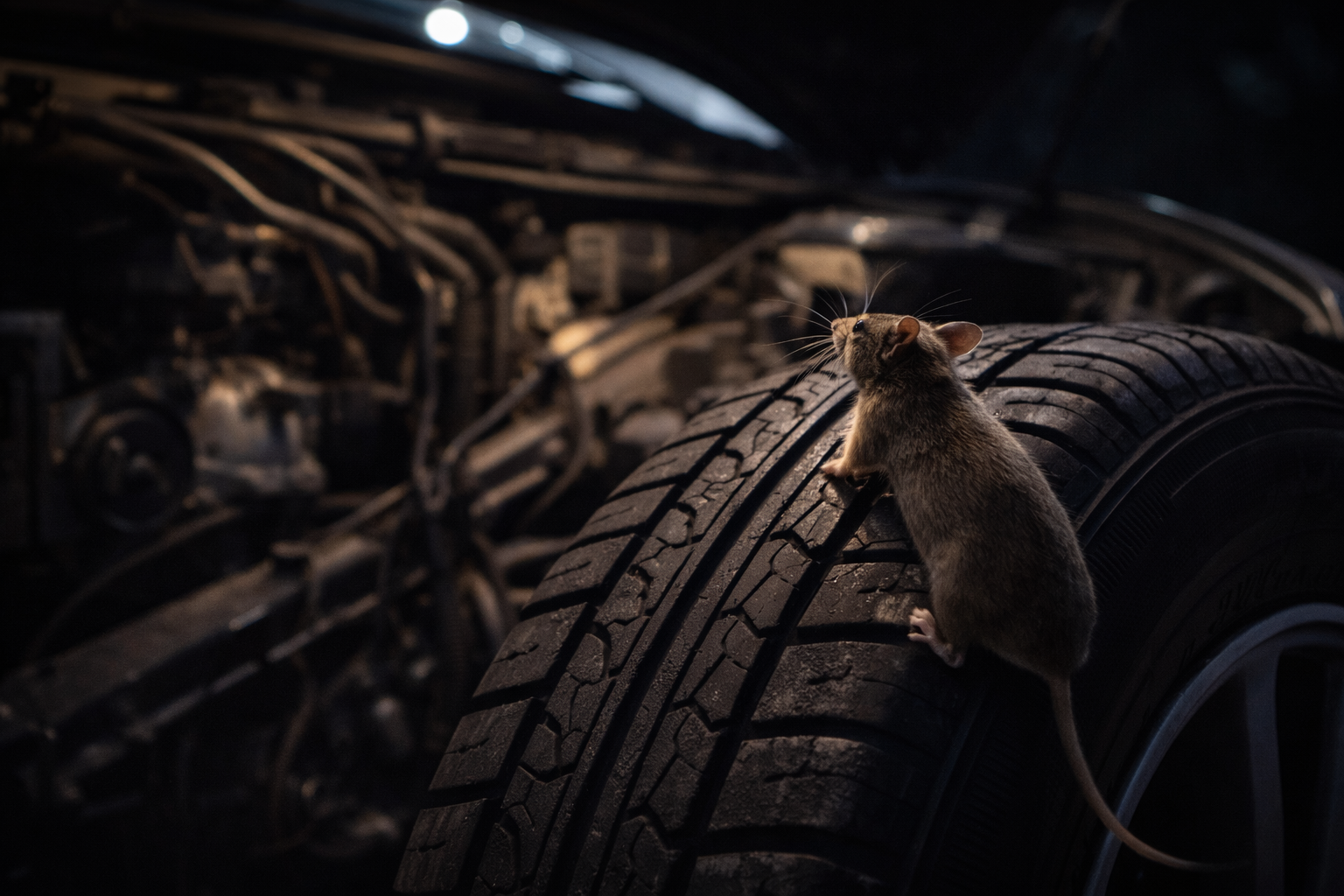
Many drivers are shocked to discover mice or rats nesting inside their car’s engine compartment. The first sign is often chewed wiring, droppings under the hood, or strange smells coming from the engine bay.
The surprising part is how easily rodents can get inside a vehicle. Mice are extremely flexible and can squeeze through openings smaller than a dime. Once they find warmth and shelter inside an engine compartment, they may return repeatedly.
Understanding how mice get into car engines is the first step toward preventing expensive damage.
How Mice Climb Into Cars
Rodents are excellent climbers. Even though vehicles may seem sealed from the outside, mice can reach the engine compartment surprisingly easily.
The most common entry paths include:
- Climbing the tires – Mice can easily scale rubber tires and suspension components.
- Entering from underneath the vehicle – The underside of most cars has multiple openings that lead into the engine bay.
- Using nearby structures – Rodents may climb from vegetation, garages, or stored items next to the vehicle.
Once a mouse reaches the engine bay, it may begin exploring for materials to build a nest.
Where Mice Enter the Engine Compartment
Cars contain several small gaps that allow wiring, hoses, and ventilation systems to pass through the vehicle body. While these openings are necessary for the car to function, they can also serve as entry points for rodents.
Common entry areas include:
- Firewall openings – Where wiring passes between the engine and cabin.
- Air intake vents – Some rodents enter through ventilation pathways.
- Undercarriage gaps – Openings around the suspension and frame.
Because mice can compress their bodies dramatically, even very small gaps can allow them to enter.
Why Engine Compartments Attract Mice
Once inside the vehicle, the engine bay provides several things rodents want: warmth, shelter, and protection from predators.
Cars that have recently been driven remain warm for hours, especially during colder months. This warmth makes engine compartments attractive nesting locations.
Rodents also chew constantly to keep their teeth from growing too long. Unfortunately, this instinct often leads them to chew on electrical wiring. Our article explaining why rodents chew car wires explores this behavior in more detail.
Signs Mice Are Getting Into Your Car
Drivers sometimes discover rodent activity only after damage occurs. However, rodents usually leave clues before serious problems appear.
Watch for these warning signs:
- Droppings under the hood
- Nesting material near the engine
- Chewed wiring insulation
- Strange smells coming from the engine bay
- Scratching sounds after parking
If you suspect rodents may already be nesting in your vehicle, see our guide on how to tell if a rodent is living in your car.
How to Stop Mice From Getting Into Car Engines
Preventing rodents from entering a vehicle often requires a combination of strategies. Some of the most effective approaches include:
- Parking in well-lit areas or garages
- Removing nearby food sources
- Keeping garbage containers sealed
- Using rodent deterrent products
- Inspecting the engine bay periodically
Our guide on how to keep rodents out of your car engine explains several prevention techniques drivers commonly use.
What Damage Mice Can Cause
Rodent damage can be expensive because modern vehicles rely heavily on electrical wiring. Even small sections of damaged wiring can trigger dashboard warning lights or sensor failures.
In severe cases, mechanics may need to replace entire wiring harnesses. Our guide on how much rodent damage to a car costs to repair explains typical repair costs.
Preventing Rodents From Returning
Once rodents discover a warm place to nest, they may return repeatedly. Taking steps to remove attractants and block easy access can help prevent future infestations.
For a complete overview of strategies that protect vehicles, garages, and homes, see our Rodent Damage Prevention Guide.
Understanding how mice enter vehicles can help drivers stop infestations before they lead to costly repairs.
Write a Reply or Comment