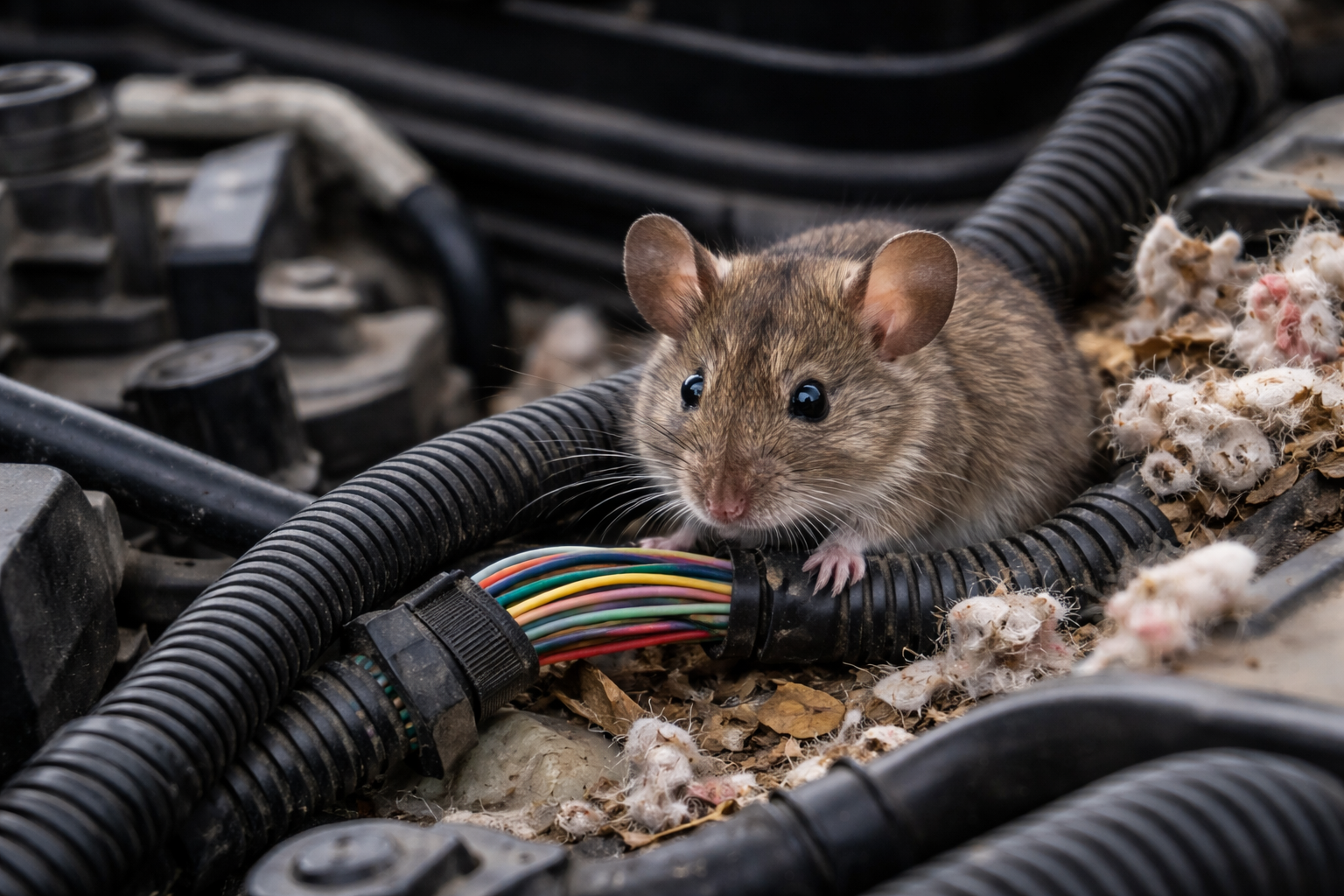
How to Keep Rodents Out of Your Car Engine
If you’ve ever opened your hood and discovered chewed wires, nesting material, or droppings, you’re not alone. Rodents nesting in car engines has become surprisingly common, especially in colder months when animals look for warm places to shelter.
The problem isn’t just unpleasant — it can also be expensive. Rodents frequently chew wiring insulation, hoses, and plastic components, which can lead to warning lights, electrical problems, or repairs costing hundreds or even thousands of dollars.
If you suspect rodents may already be active around your home, start by learning the early signs of a rat infestation, since car damage often begins with rodents living nearby.
Why Rodents Nest in Car Engines
Engine compartments provide three things rodents love: warmth, shelter, and protection from predators. After a car has been driven, the engine area stays warm for hours, making it an attractive place for mice or rats looking for a safe nesting spot.
Modern vehicles may also be more vulnerable because some wiring insulation contains soy-based materials that rodents appear to find especially appealing.
Our guide on rodents destroying cars and how to stop them explains why this problem has become increasingly common.
Signs Rodents May Be Living in Your Engine Bay
- Droppings under the hood
- Leaves or insulation used for nesting
- Chewed wiring or hoses
- Strange smells from nesting material
- Dashboard warning lights caused by damaged wiring
These signs often appear weeks before drivers realize rodents have entered the vehicle.
How to Keep Rodents Out of Your Car Engine
1. Park Strategically
If possible, park in a garage or well-lit area rather than near vegetation, wood piles, or trash containers.
2. Remove Nearby Food Sources
Rodents frequently appear because food sources are nearby. Pet food, bird seed, and unsecured trash can attract rodents that eventually explore parked vehicles.
If rodents are visiting your trash area regularly, our article on why rats love garbage cans explains how garbage storage can attract infestations.
3. Use Rodent Repellent Spray
Peppermint-based sprays are one of the simplest deterrents for engine compartments. Rodents dislike strong mint oils, and the scent can make the engine bay a less attractive nesting location.
Mighty Mint Peppermint Oil Rodent Repellent Spray
This spray is commonly used around garages, wheel wells, and engine compartments. It needs to be reapplied periodically, but many drivers find it helpful as part of a prevention routine.
4. Install Rodent Deterrent Tape
Some manufacturers sell special wiring tape that contains capsaicin, the compound that makes peppers spicy. When rodents chew on the tape, the taste discourages them from continuing.
This tape is often wrapped around vulnerable wiring areas inside the engine bay and is widely recommended by mechanics for protecting exposed wiring harnesses.
5. Use Ultrasonic Deterrent Devices
Ultrasonic deterrents emit high-frequency sound waves that irritate rodents but are usually inaudible to humans. Some models are designed specifically for vehicle engine compartments.
Loraffe Under Hood Rodent Repeller
These devices can provide continuous deterrence when installed properly and are often used together with other prevention strategies.
Tip: Most drivers find that combining deterrent spray with wiring protection tape provides the most reliable prevention.
Our review of the best rodent repellents for cars compares several different deterrent approaches.
What To Do If Rodents Have Already Damaged Your Car
If you discover chewed wiring or other damage, it’s important to address it quickly.
Some repairs may be covered under comprehensive auto insurance policies. Our guide to rodent damage and auto insurance coverage explains when insurance may pay for repairs.
Simple Prevention Checklist
- Seal garbage containers
- Remove food sources near parking areas
- Inspect engine compartments periodically
- Use deterrent sprays or devices
- Address infestations quickly
If you want a deeper look at the deterrent products that actually work, see our guide to the best rodent repellents for cars.
For a complete overview of prevention strategies for homes, garages, and vehicles, see our Rodent Damage Prevention Guide.
Write a Reply or Comment