Updated: February 21 2026
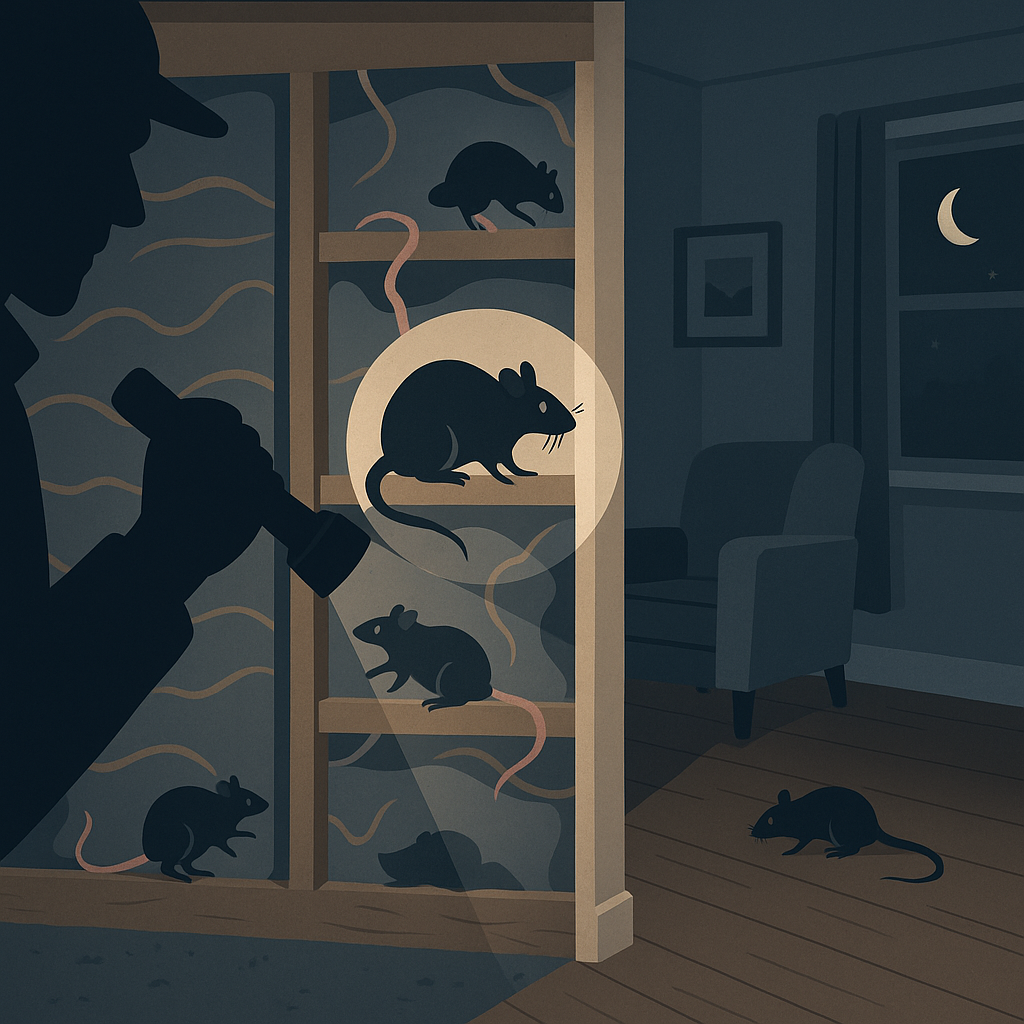
Scratching sounds at night are easy to dismiss as pipes or normal house noises — until the sounds start moving from wall to wall. Rats often live inside walls long before homeowners ever see one, leaving subtle warning signs that are easy to miss.
A few garbage-related rat sightings are unsettling, but nothing compares to the moment homeowners realize something much worse may be happening: rats living inside the walls. It starts small — a faint scratch at night, an odd tapping sound, or that feeling that something is moving where it shouldn’t be.
Wall activity is often discovered late in an infestation. If you suspect something earlier, this guide on how to identify a rat infestation before you see one explains the first warning signals homeowners notice.
Rodent Damage Prevention Guide
The good news? Rats in walls leave very consistent signs, and once you know what to look for, you can confirm an infestation quickly and take action before major damage is done.
This guide walks you through the early warning signs, what’s actually happening inside those walls, and the safest ways to get rats out for good.
? 1. You Hear Scratching, Scurrying, or “Light Footsteps” at Night
Rats are nocturnal, so nighttime noises are a primary indicator. Sounds typically include:
- Light rapid scurrying
- Scratching inside drywall
- Gnawing or chewing
- Thumping behind the wall cavity
- Occasional squeaks
If noises are happening mostly between 11 p.m. and 4 a.m., rats are highly likely.
Tip: Put your ear against the wall during quiet hours. If you hear movement that seems “inside” rather than from a neighbor or pipes, that’s a strong sign.
? 2. Rat Droppings Near Walls, Baseboards, or Behind Appliances
Even if droppings aren’t in the wall cavity itself, they tend to accumulate:
- Behind the stove
- In the basement
- Near HVAC returns
- Along the edges of rooms
- Under sinks
Fresh droppings are dark and moist; older ones turn gray and dry.
If you haven’t yet, read:
? Why Rats Love Your Garbage Cans (and How to Keep Them Out)
This is often where the indoor rat problems begin.
? 3. Grease Smudges or “Rub Marks” on Walls
Rats run the same pathways repeatedly. Their oily fur leaves unmistakable dark streaks on:
- Drywall
- Electrical conduits
- Baseboards
- Foundation edges
If your wall has new smudges or discolorations that don’t wipe clean easily, rats may be slipping in and out of hidden openings.
?? 4. Small Holes or “Chew-Outs” Near Floor Level
Rats chew access holes around:
- Pipes
- Vents
- Electrical outlets
- Cracks in plaster
- Utility penetrations
A typical rat hole is quarter-sized, often with rough, gnawed edges.
If you discovered rats chewing through your car wiring, this is a natural next step:
? Rodents Are Destroying Cars: Here’s How to Stop Them — And What Auto Insurance Actually Covers
? 5. Bizarre Electrical Issues (Yes, Rats Chew Wires)
If your lights flicker or breakers trip at random, rats may be chewing electrical insulation inside your wall cavities. This is dangerous for two reasons:
- Fire hazard
- Damage to expensive wiring that requires wall demolition to repair
If electrical anomalies coincide with any other signs on this list, take it seriously.
? 6. You Notice a Foul, Musky, “Warm” Odor
A rat nest has a very distinct smell — musky, slightly sour, and strongest near corners or radiators. If the smell comes from one particular wall, that’s the nest zone.
The odor becomes worse when:
- Nesting materials accumulate
- Rats urinate in the same area
- A rat dies inside the wall
If you suddenly smell something rotten that lasts for days, it may be a deceased rat.
?? What to Do If You Suspect Rats in Your Walls
1. Seal Outdoor Entry Points
Focus on:
- Gaps around AC lines
- Foundation cracks
- Holes near gas pipes
- Openings behind siding
- Trash areas (major attractant)
Your garbage setup still matters:
? 3 Best Rat-Proof High-Capacity Garbage Cans (once published)
2. Use Humane, Non-Poison Solutions First
Poison leads to rats dying inside walls — which creates a horrific smell and sometimes requires tearing open drywall.
Instead, use:
- ContraPest (fertility control) — safe, EPA-approved, reduces population over time
- Snap traps in sealed boxes
- Ultrasonic repellers in basement/attic access points
You can safely mention ContraPest again for internal reinforcement.
3. Call a Professional if You Hear Daily Movement
Persistent scratching means multiple rats or a nest with young. Professionals can:
- Scope walls with an inspection camera
- Identify where rats breach siding
- Seal areas you wouldn’t think to check
- Remove nests humanely
Rats in the walls are unsettling — but they’re also predictable. If you know the signs, you can confirm an infestation early and fix it before serious damage occurs. By controlling food access (yes, even your trash), sealing entry points, and using safe control methods, most homeowners can eliminate wall infestations in weeks.
Frequently Asked Questions
How do I know if the noise is rats or just pipes?
Rats are most active at night and often produce scratching or scurrying that changes location. Pipes are usually more consistent and tied to water use or heating cycles.
Should I use poison if rats are in my walls?
Most homeowners should avoid poison because rats can die inside wall cavities, creating odor and insect problems. Sealing and targeted removal are usually safer.
How do rats get into walls?
Common entry points include gaps around pipes and vents, siding openings, rooflines, and foundation cracks. Even small openings can be enough.
How long does it take to get rid of rats in walls?
With sealing plus targeted control, many infestations improve within 1–3 weeks. Heavier infestations can take longer if nearby food sources remain.
 💬
Dealy Planet
💬
Dealy Planet