
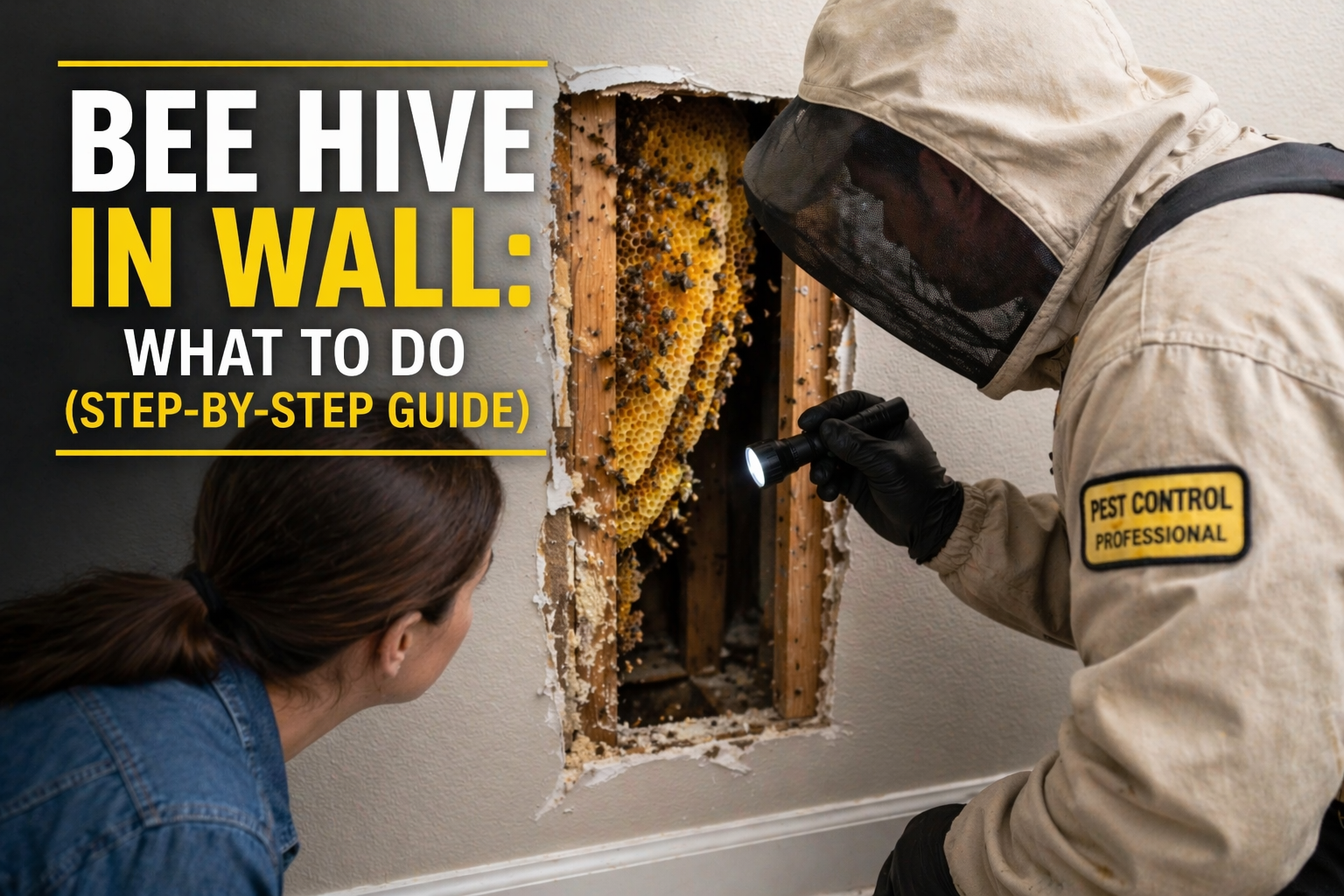
Discovering that bees may be living inside your walls can be alarming. You may hear buzzing, see bees entering or exiting a small opening, or even find bees appearing inside your home.
Get DealyPlanet by email Practical help with insurance claims, expensive repairs and consumer problems.
While it may be tempting to act quickly, the wrong approach can make the problem worse—or even dangerous.
Here’s what to do if you suspect a bee hive inside your wall.
Step 1: Confirm the Hive Location
The first step is to confirm where the bees are entering and exiting.
Look for:
- consistent bee activity around a small hole or gap
- bees flying in and out of siding, rooflines, or vents
- buzzing sounds inside walls
This helps determine whether the hive is actually inside the wall or somewhere nearby.
Step 2: Do NOT Seal the Entry Point
One of the most common mistakes homeowners make is sealing the hole where bees are entering.
This can trap bees inside the wall, causing them to:
- find their way into living areas
- spread deeper into the structure
- die inside the wall, leading to odor and secondary pest problems
Sealing the entry point before the hive is removed almost always makes the situation worse.
Step 3: Avoid Spraying Into the Wall
Spraying pesticides into a wall cavity rarely removes the hive completely.
In many cases, it kills some of the bees but leaves the colony intact. This can result in:
- continued bee activity
- partial hive die-off followed by re-infestation
- honey and wax remaining inside the wall
These materials can attract other pests and create additional problems.
Step 4: Understand the Risks of DIY Removal
Bee colonies can contain thousands of insects. Disturbing the hive without proper equipment can trigger defensive behavior.
Risks include:
- multiple stings in a short period of time
- severe allergic reactions
- inability to safely access the hive inside the wall
Professional pest control technicians use protective gear and specialized tools designed for safe removal.
Step 5: Call a Professional for Wall Hives
If the hive is inside the wall, professional removal is usually the safest and most effective option.
A proper removal typically involves:
- locating the full extent of the hive
- opening the wall or siding if necessary
- removing the bees, honeycomb, and wax
- cleaning and sealing the area to prevent future infestations
You can learn more about pricing in our guide to bee hive removal costs.
Step 6: Prevent Future Infestations
After the hive is removed, it is important to prevent bees from returning.
This may include:
- sealing gaps in siding or rooflines
- installing screened vent covers
- repairing areas that allow access into the structure
Preventative measures are often the key to avoiding repeat problems.
Quick Answer
If you find a bee hive in your wall, do not seal the entry point or try to remove it yourself. Bees can spread deeper into the structure. Instead, confirm the hive location and contact a professional, especially if activity is increasing.
If you’re trying to understand the potential cost beyond just bees, here’s what it typically costs to remove animals from walls.
How Serious Is a Bee Hive in a Wall?
A bee hive inside a wall can quickly become a serious problem. As the colony grows, bees expand deeper into the structure, increasing the difficulty and cost of removal. Honey and wax can also damage drywall and attract other pests.
Removal costs can vary significantly depending on how deep the hive is inside the structure. Here’s a full breakdown of bee hive removal costs.
Related Pest Control Guides
FAQ
Will bees leave a wall on their own?
Established colonies typically remain in place and continue growing unless they are removed.
What happens if you leave a hive in the wall?
The hive may expand, attract other pests, and potentially cause structural or sanitation issues over time.
Can you remove a hive without opening the wall?
In most cases, full removal requires access to the hive to eliminate the colony and remove the comb.
Write a Reply or Comment