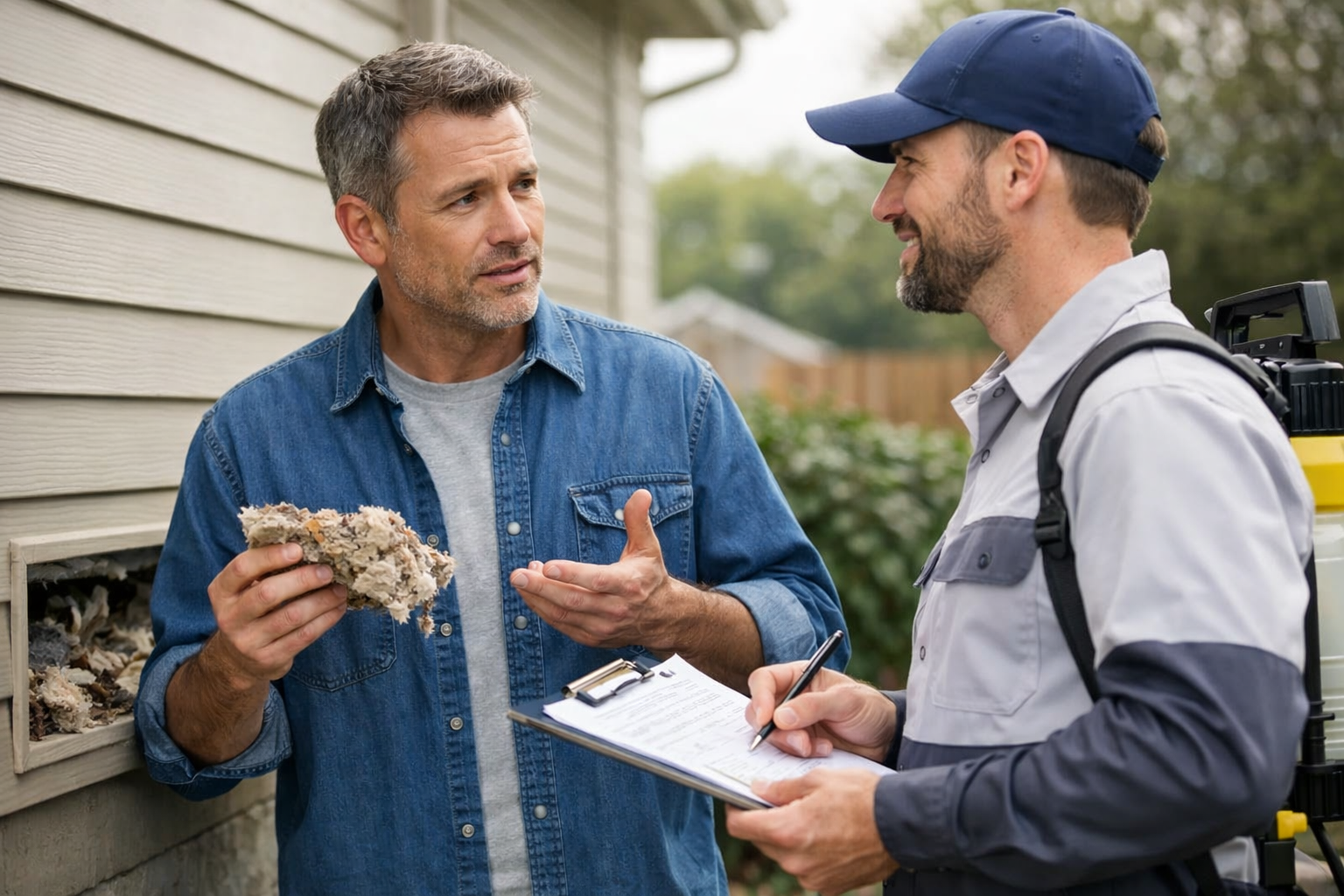
Many homeowners try to deal with pest problems themselves first. In many cases, that works. A single mouse trap or a spray treatment can sometimes solve the issue – or at least they want to attempt it first.
But there are situations where do-it-yourself pest control is unlikely to work. Knowing when to call a professional can save time, money, and sometimes serious damage to your home.
When the Problem Keeps Coming Back
If you eliminate pests but they return repeatedly, the real issue may be hidden somewhere in the structure of the house.
For example, a homeowner might remove insects several times before discovering that a large colony exists inside a wall or vent system.
Recurring problems often indicate that pests have established a nest or entry point that needs professional treatment.
When You Discover a Large Colony
Some infestations become too large for simple consumer treatments.
Examples include:
- large bee or wasp colonies
- carpenter ant nests inside structural wood
- rodent infestations inside walls or attics
Large colonies often require specialized equipment or chemicals that homeowners typically do not have access to.
When the Infestation Is Inside the Structure
Pests living inside structural components of a home can be difficult to eliminate without professional help.
Common examples include:
- animals living inside walls
- nests inside attic insulation
- colonies inside ventilation ducts
- insects inside wood framing
Professionals are often able to identify entry points and hidden nests that are difficult for homeowners to locate.
When the Pest May Cause Structural Damage
Some pests can damage the structure of a home if left untreated.
Examples include:
- carpenter ants
- termites
- rodents chewing wiring
These situations often justify faster professional intervention.
When Health Risks Are Involved
Certain pests carry potential health risks.
Examples include:
- rodents that can spread disease
- stinging insects such as bees and wasps
- large insect infestations inside living areas
Professional pest control technicians have protective equipment and training for dealing with these situations safely.
When DIY Methods Have Failed
If you have already tried multiple treatments without success, it may be time to call a professional.
Repeated unsuccessful treatments can allow the infestation to grow larger over time.
Quick Answer
When should you call a pest control professional?
You should call a pest control professional when an infestation keeps returning, when pests are living inside the structure of your home, when the colony is large, or when the pest may cause structural damage or health risks.
FAQ
Is pest control worth it for small problems?
For small, isolated problems, DIY solutions often work well. Professional services are more useful when infestations are persistent or widespread.
How quickly should pest control respond?
For active infestations, most pest control companies can schedule inspections within a few days.
Do pest control companies provide inspections?
Many pest control companies offer inspections to identify the source of infestations before recommending treatment.
Write a Reply or Comment