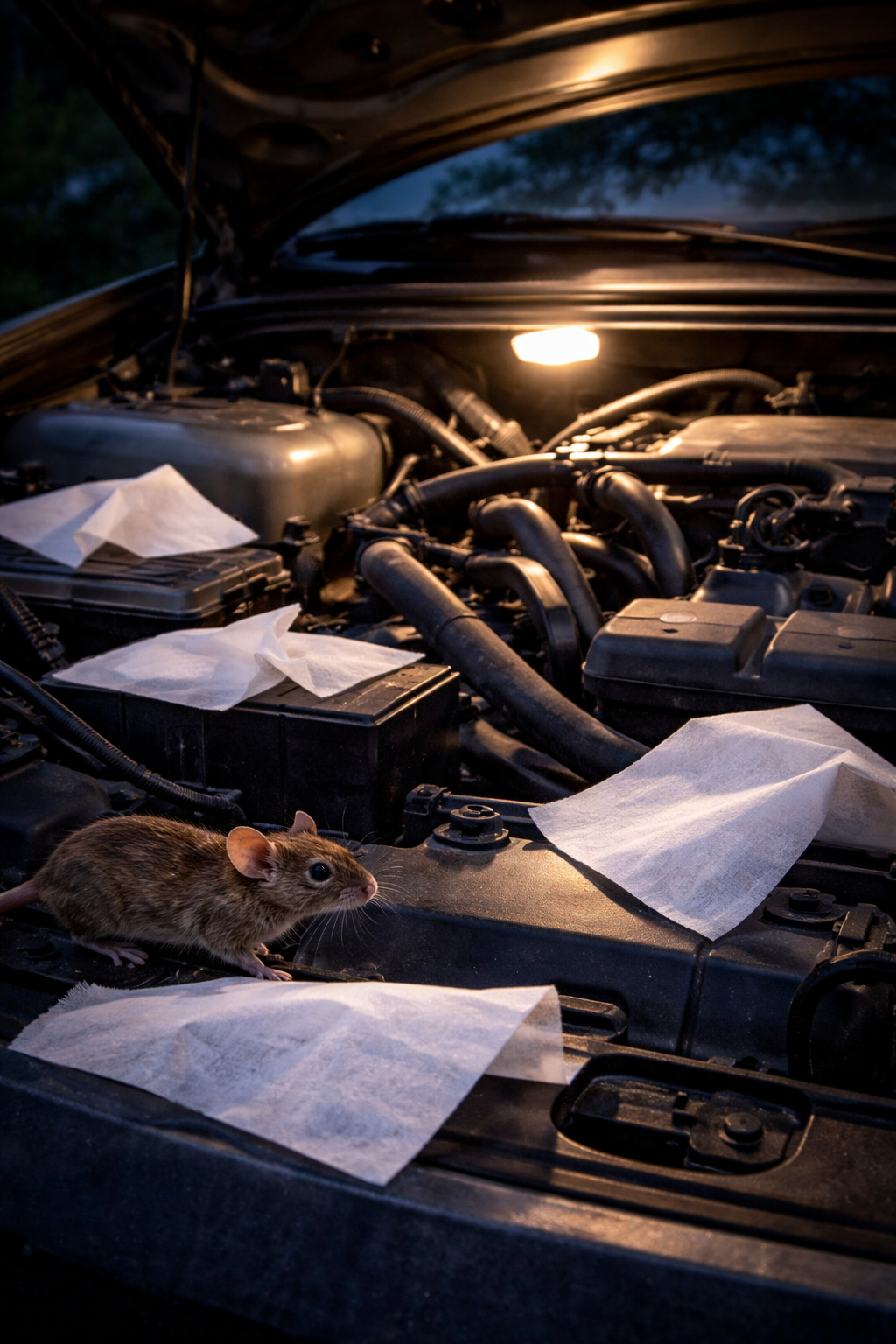
One of the most common pieces of advice drivers hear when dealing with rodents is to place dryer sheets under the hood of the car. According to the internet, the strong scent is supposed to repel mice and prevent them from nesting inside the engine compartment.
But does this actually work?
The short answer is that dryer sheets may temporarily discourage rodents in some situations, but they are not a reliable long-term solution. Understanding why mice enter cars in the first place can help drivers choose better ways to protect their vehicles.
Why People Believe Dryer Sheets Repel Mice
The idea behind dryer sheets is simple: mice rely heavily on their sense of smell, and strong scents may make an area less attractive for nesting.
Dryer sheets contain perfumes and chemicals designed to leave laundry smelling fresh. Because these scents are strong, some people believe they overwhelm rodents’ sensitive noses and drive them away.
This idea has circulated online for years, and many drivers report trying it after finding droppings or nesting material under the hood of a vehicle.
Do Dryer Sheets Actually Work?
In practice, dryer sheets rarely solve a rodent problem by themselves.
The scent fades quickly, especially in outdoor environments or inside engine compartments exposed to heat and airflow. Mice that are determined to nest inside a vehicle often ignore the smell after a short period of time.
There is also little scientific evidence showing that dryer sheets consistently repel rodents.
That means drivers who rely only on dryer sheets may still end up dealing with chewed wiring or nests inside their engine bay.
Why Mice Get Into Cars in the First Place
Cars are surprisingly attractive to rodents. After a vehicle has been driven, the engine compartment stays warm for hours. The space is sheltered from wind and predators, making it a comfortable place for mice to hide.
Mice are also excellent climbers. They can scale tires or suspension components and squeeze through tiny openings to reach the engine bay.
If you’re curious how this happens, our guide on how mice get into car engines explains the most common entry points.
Better Ways to Keep Mice Out of Cars
Drivers dealing with rodent problems usually have better success using a combination of prevention methods.
These include:
- Keeping garages and parking areas free of food sources
- Sealing trash containers that attract rodents
- Checking under the hood periodically for early signs of nesting
- Using rodent deterrent products designed for wiring and engine compartments
Our guide on how to keep mice out of your car explains several practical strategies drivers use to prevent infestations.
Why Preventing Rodents Matters
Rodents chewing automotive wiring is a growing problem. Modern vehicles rely heavily on electrical systems, sensors, and computer modules.
Even small amounts of damage can cause warning lights, electrical failures, or engine problems.
Repairs can range from hundreds to thousands of dollars depending on which wiring harness is damaged.
Our article on how much rodent damage to a car costs to repair explains the typical repair bills drivers face.
The Bottom Line
Dryer sheets may create a strong scent, but they are not a dependable way to keep mice out of cars. While they might provide temporary deterrence, rodents often ignore them once the scent fades.
Drivers concerned about rodent damage are usually better off focusing on prevention strategies that make their vehicle and parking area less attractive to mice in the first place.
Write a Reply or Comment