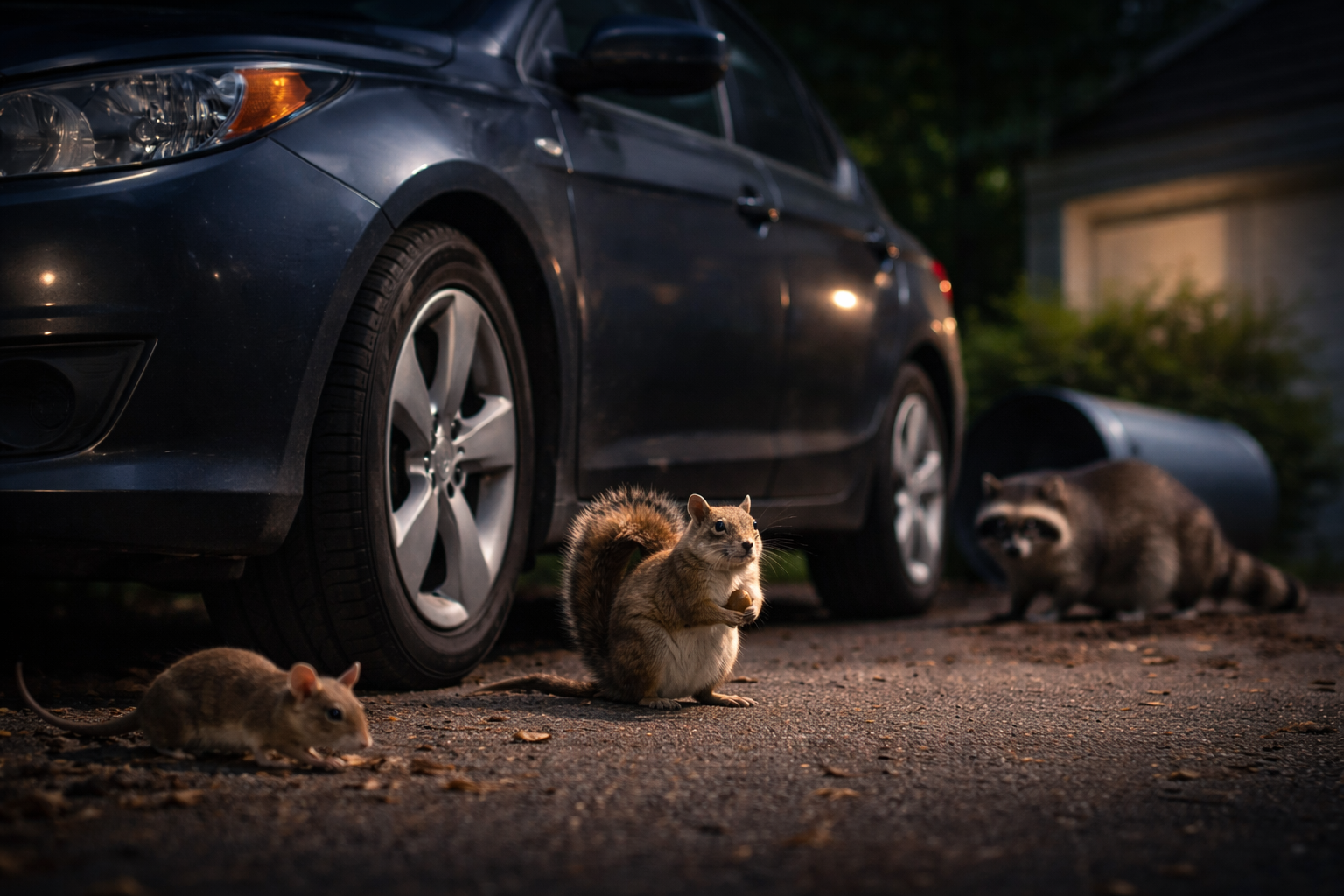
Most drivers are surprised to learn that animals sometimes cause serious damage to parked vehicles. While mechanical failures and accidents get most of the attention, wildlife can also create expensive problems—especially when animals crawl into engine compartments.
Rodents are responsible for most of this damage, but they are not the only animals that may interact with vehicles. Understanding which animals are most likely to damage a car can help drivers recognize warning signs and prevent problems before repairs become expensive.
Rodents (Mice and Rats)
The most common animals responsible for vehicle damage are rodents, especially mice and rats. These animals are attracted to cars because engine compartments provide warmth, shelter, and protection from predators.
Rodents chew constantly to keep their teeth from growing too long. Unfortunately, electrical wiring insulation often becomes a target.
If you want to understand why this happens, our guide on why rodents chew car wires explains the behavior in more detail.
Drivers who suspect rodents are already present should watch for the warning signs explained in how to tell if a rodent is living in your car.
Squirrels
Squirrels are also rodents and can cause similar types of damage to vehicles. Like mice and rats, squirrels chew materials to wear down their teeth.
In some cases squirrels climb onto parked vehicles and enter engine compartments in search of nesting material or warmth.
Although squirrels are less likely to nest inside vehicles than mice, they are capable of chewing through wiring insulation, hoses, and plastic components.
Chipmunks
Chipmunks behave similarly to squirrels and can sometimes store food inside engine compartments. Drivers occasionally discover seeds, nuts, or other stored materials under the hood.
While chipmunks usually cause less wiring damage than rats or mice, their nesting and food storage behavior can still create problems.
Raccoons
Raccoons rarely crawl into engine compartments, but they can damage vehicles in other ways. Because raccoons frequently search for food in garbage containers, they sometimes climb on parked cars and trucks.
This behavior can lead to scratched paint, damaged trim, or other cosmetic issues.
If rodents are being attracted by trash near where vehicles are parked, our article on why rats love garbage cans explains why unsecured garbage often contributes to infestations.
Cats and Other Small Animals
Cats and other small animals are sometimes attracted to the warmth of recently parked vehicles. Although they usually do not chew wiring, they may crawl under the hood or beneath the vehicle for warmth.
This can create safety concerns if animals remain inside the engine compartment when the car is started.
How to Prevent Animals From Entering Your Car
The best way to avoid animal-related vehicle damage is prevention. Drivers can reduce the risk by taking a few simple steps:
- Keep garbage containers sealed
- Remove food sources near where vehicles are parked
- Inspect engine compartments periodically
- Use rodent deterrent products if infestations are common
Our guide on how to keep rodents out of your car engine explains several practical strategies drivers use to prevent rodents from nesting under the hood.
What Animal Damage to Cars Can Cost
Damage caused by animals can vary from minor cosmetic issues to major electrical repairs. When rodents chew through wiring harnesses, repairs may cost hundreds or even thousands of dollars.
Our guide on how much rodent damage to a car costs to repair explains typical repair costs.
For a broader overview of prevention strategies that protect vehicles, garages, and homes, see our Rodent Damage Prevention Guide.
Understanding which animals can damage vehicles helps drivers recognize early warning signs and take steps to protect their cars from expensive repairs.
Write a Reply or Comment