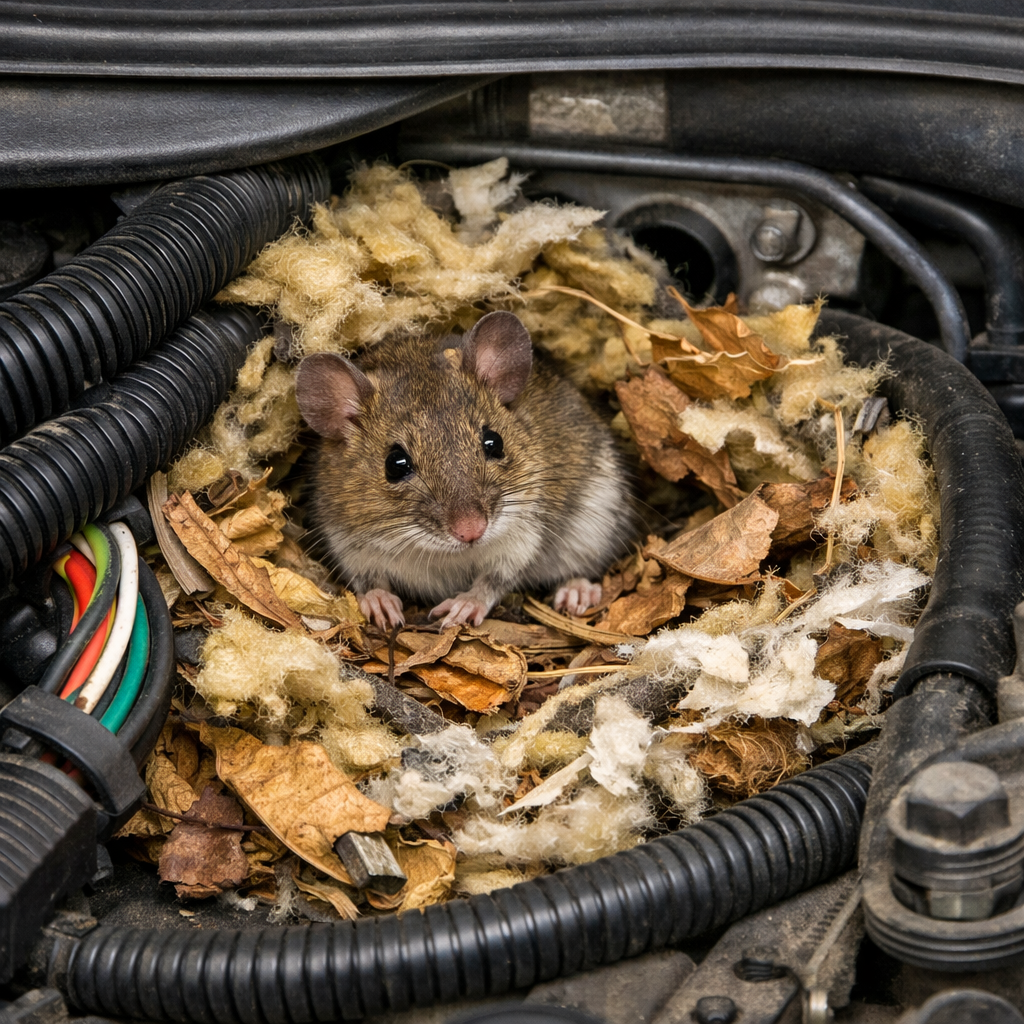
Many drivers only discover a rodent problem when they open the hood and find something alarming: a small pile of leaves, insulation, or shredded paper tucked near the engine. In many cases, this material is part of a mouse nest.
Engine compartments are warm, sheltered places that attract rodents looking for a safe nesting location. Unfortunately, once mice build a nest inside a car, they often begin chewing wiring and insulation, which can lead to expensive repairs.
If you find a mouse nest in your car engine, acting quickly can prevent more serious damage.
Why Mice Build Nests in Car Engines
Mice constantly search for safe places to hide from predators and raise their young. Engine compartments provide several things rodents want: warmth, darkness, and protection.
After a car has been driven, the engine bay can stay warm for hours. This warmth is especially attractive during cooler weather.
Mice also collect soft materials to build nests. Leaves, insulation, paper, and even pieces of fabric can end up packed into tight spaces around the engine.
Our article explaining why rodents chew car wires describes why wiring often becomes a target once rodents settle in.
Signs There May Be a Mouse Nest Under the Hood
A visible nest is the most obvious sign of rodents in a vehicle, but there are often other clues before a nest becomes noticeable.
- Small black droppings under the hood
- Leaves or shredded material near the engine
- Strange smells from the engine compartment
- Scratching sounds after parking
- Dashboard warning lights caused by damaged wiring
If you are unsure whether rodents are present, see our guide on how to tell if a rodent is living in your car.
What to Do Immediately If You Find a Mouse Nest
If you discover a nest inside the engine compartment, it’s best to deal with the problem before driving again.
Start by carefully removing nesting material using gloves. Rodent nests can contain droppings and bacteria, so avoid direct contact.
Next, inspect the surrounding area for chewed wiring or damaged hoses. Even small amounts of damage can affect modern vehicles that rely on complex electrical systems.
If you see damaged wiring, a mechanic should inspect the vehicle before it is driven extensively.
How to Prevent Mice From Returning
Once rodents discover a warm place to nest, they may return repeatedly unless the environment changes.
Drivers can reduce the risk by:
- Keeping garbage sealed near parking areas
- Removing food sources from garages
- Inspecting the engine bay regularly
- Using rodent deterrents
Some mechanics recommend using deterrent tape designed for wiring harnesses. This capsaicin-based tape discourages rodents from chewing.
See the rodent deterrent tape used by many mechanics
For more prevention strategies, see our guide on how to keep rodents out of your car engine.
How Expensive Can Rodent Damage Be?
Rodent damage can be surprisingly expensive. Modern vehicles contain extensive wiring harnesses that control sensors, computers, and safety systems.
If rodents chew through these wires, repairs can range from a few hundred dollars to several thousand dollars depending on the damage.
Our guide on how much rodent damage to a car costs to repair explains the typical costs drivers face.
Spotting a mouse nest early is the best way to prevent a small problem from becoming a very expensive one.
Write a Reply or Comment